
Project duration: 1 January 2005–1 September 2007
Project co-funders:
Open Society Institute ZUG Foundation
In-country project-related activities were funded by:
Balkan Trust of Democracy & Sweden International Development Agency, Education Support Program, USAID and IREX (in Kosovo)
US Embassy Democracy Commission (in Bulgaria)
US Embassy Democracy Commission (in Azerbaijan)
US Embassy, EU Phare program (in Romania)
Centre of Testing Technologies and Monitoring of Education Quality (in Ukraine)
Project coordinator: Modern Didactics Centre – at the time, the administrative institution for the activities of the RWCT International Consortium
Project partners – RWCT International Consortium members:
“Step by Step” Benevolent Foundation (Armenia)
Center for Innovations in Education (Azerbaijan)
Bulgarian Reading Association (Bulgaria)
“School-Family-Society” Association (Georgia)
Non-governmental Foundation for Innovative Education “Peremena” (Kyrgyzstan)
Kosova Education Center (Kosovo)
Romanian RWCT Association (Romania)
“RWCT-Russia” Special Interest Council of IRA (Russia)
“Intellect” Scholarly-Methodical Center for Development of Critical and Visual Thinking (Ukraine)
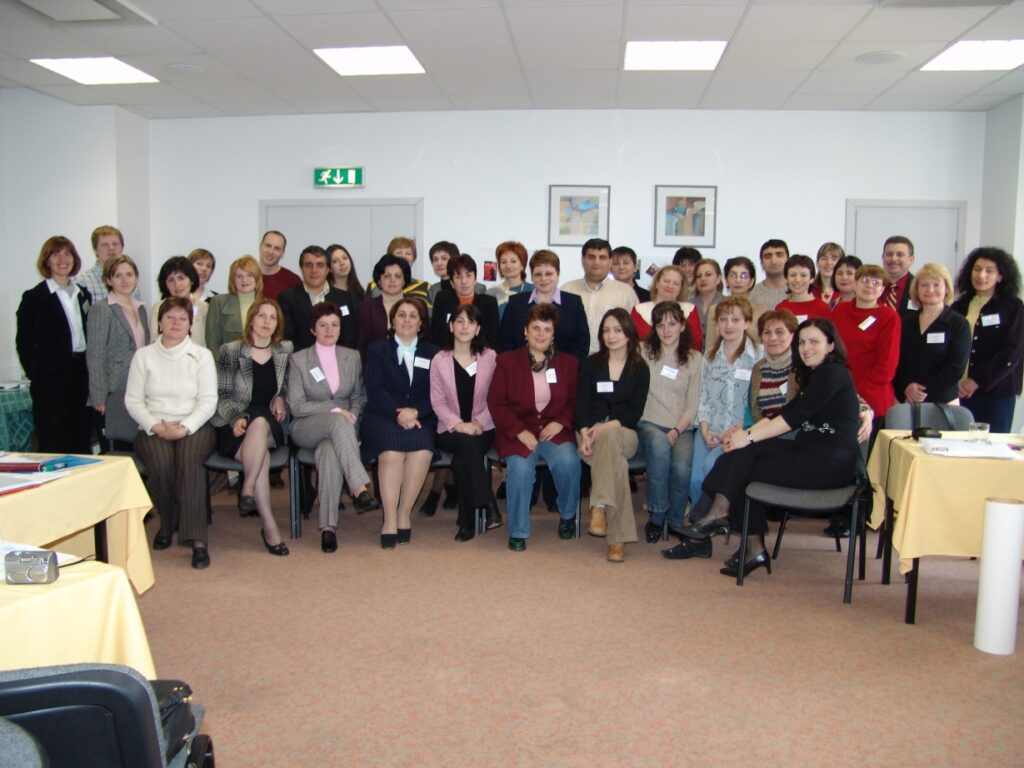
Project teem meeting in Vilnius, Lithuania
PROJECT RELEVANCE
Anti-corruption movement is quite new in young democratic countries. It meets quite big challenges, as work of social institutions here is not so efficient as in Western countries, having long experience of democratic life, public awareness and consciousness is quite low. Many of RWCT International Consortium countries, as post soviet countries, inherited some corrupted thinking and behavior. With corruption invading into government institutions and the crime situation getting worse, the general public began to lose confidence in law enforcement and other bodies, and the rule of law was put at risk. Local investigations and reports prove that anti-corruption is “hot” topic and needs to be developed by all possible means.
Education is one of the most active social sectors, where concrete system reforming steps can prove and influence anti-corruption prevention. The effectiveness of anti-corruption efforts highly depends on the civic virtue, the eagerness of the public to co-operate with law enforcement institutions and, quite as important, heightened public expectations of the quality of public services. The willingness of people to report corruption and their support for a transparent society would not be possible without the community awareness and education schemes reaching into the housing estates, schools, colleges and universities. Setting the climate for change and generating respect for a transparent and just society is an important and integral part of best practice in preventing corruption.
This project initiative is undertaken by Modern Didactics Centre from Lithuania, as it has experience in the field of anti-corruption education and could share a good practice. Modern Didactics Centre in close cooperation with Special Investigation Service and Ministry of Education and Science of the Republic of Lithuania implemented a series of anti-corruption projects: “Education Against Corruption” (2002–2003), “Development of Higher Education Anti-Corruption Study Programmes” (2003–2004), “Development of In-service Training Programme for Anti-corruption Education” (2004). As result of these projects there were the integrated optional anti-corruption programme for secondary schools, programmes and courses for anti-corruption education at universities, in-service training programme of anti-corruption education for teachers’ professional improvement developed and a team of trainers responsible for the project ideas dissemination in the regions was trained.
PROJECT AIMS
- To prevent corruption and increase anti-corruption awareness through development of anti-corruption educational programmes for teachers and local communities.
- To contribute to the capacity building of participating institutions and make regional impact (or at least serve as grassroots initiative) on public awareness raising.
PROJECT OBJECTIVES
- To build in-country teams.
- To make in-countries situation analysis and needs assessment for anticipation education.
- To develop anti-corruption programmes for formal and non-formal education.
- To develop informational resource pack (glossary of main concepts and terms, articles, lesson examples and etc.).
- To train in country teams, capable and further responsible for the project dissemination activities.
- To share examples of good practice (classroom observations, discussions, debates and etc.).
- To develop strategic plans for anti-corruption actions in countries.
- To provide external expertise and consultations to local communities.
- To plan follow-up activities after the project ends.
PROJECT TARGET GROUPS
- Educators (teachers and teacher trainers). About 750 educators were involved in the project. Trainings for them were delivered in order to raise awareness on corruption and to present possibilities of anti-corruption education and youth initiatives in school. Educators acquired skills of integrating topics of anti-corruption education at they subject teaching and extra-curricular activities.
- School administrators. About 200 school administrators from pilot schools were involved in trainings as well and participated in meetings with Lithuania experts. By sharing experience, they were acquainted with anti-corruption movement in Lithuania and successful cooperation between different sectors in this field; during the workshops they have a possibility to estimate the integration of anti-corruption education into school curriculum and extra-curricular activities. Involvement of school administrators into the project helped to gain a better administrative support for anti-corruption initiatives in schools.
- Social partners (members of school communities, NGOs). Basically social partners took active participation in dissemination activities of the project: debates, meetings, discussions, presentations, and local conferences. For the future, social partners could act as project team partners in national anti-corruption projects and other social initiatives.
- Students. As trained teachers from pilot schools taught the course on anti-corruption education in their schools either integrating it into their subject areas or presenting it as a separate classroom hour or after school hours, lot of students were acquainted with the phenomena of corruption and possible ways to combat it (more than 1982 students). Thus contributed to rising of social and civic attitudes towards corruption awareness of young people. In some countries, for example Georgia, Russia, university students were involved into the project by organizing for them separate trainings after which students have conducted two-day seminar for student’s self-government bodies in schools.
- National project teams. Teams were formed from representative persons from partner organizations, teachers of secondary school and university teachers. Local teams are responsible for project activities during project period and after it.
PROJECT ACTIVITIES
Situation and needs analysis
During the initial stage of the project, a situation and needs analysis was conducted to highlight the needs and operational opportunities of the project participants and other stakeholder groups. The countries provided information on existing and ongoing anti-corruption measures; assessed the need for anti-corruption measures within the education system; and analyzed the possibilities for implementing anti-corruption measures in the education system.
Develompent of resource pack
Project developers translated and selected for project participants a package of different anti-corruption materials in English and Russian, prepared by such organizations as World Bank, EU, UNDP, OSI, Transparency International, Ministry of Education and Science of the Republic of Lithuania, National Examination Centre of Lithuania as well as lesson examples and etc.
Study visit to Lithuania / 18–22 April 2005
Five days intensive programme was scheduled in such a way, that project participants could have clear picture of what is done in Lithuania in terms of successful cooperation between different sectors (NGO and state institutions), on legal basis (laws, decisions, state programmes and etc.), could share their own experience and develop drafts of in-country plans. Country teams have met with teachers and lecturers – authors of anti-corruption educational programmes for secondary and higher schools and have a training workshop: they have worked practically with developed programmes, made critical analysis and developed optional strategies / plans / models for their own country needs. Reading and Writing for Critical Thinking (RWCT) programme served as main methodological background for anti-corruption education programmes.
Project partners also have met with representatives of Special Investigation Service of Lithuania, officers of the Ministry of Education and Science, had full picture of anti-corruption measures, taken by state institutions in Lithuania, participated into the open discussions, compared educational systems and have got positive feedback for follow-up activities in country.
Participants have got acquainted with work of Lithuanian NGOs – Transparency International Lithuanian Chapter (TILC) and National Union of Students Representations of Lithuania (NUSTL), that are active partners in projects, connected with public awareness raising, civil society and anti-corruption actions and research. Participants were able to compare and evaluate anti-corruption measures taken in Lithuania and their native country, got consultations.
Consultations and expertise in countries
Each participating country had an expert from Lithuania – either for school curriculum or communities (non-formal) programme development. The experts provided consultations and helped to develop programmes, observed classroom and schools activities, have met with local authorities and evaluated country teams progress in the project.
In-country activities
- Development of the anti-corruption training programmes. The project teams developed the course on anti-corruption education in their schools either integrating it into their subject areas or presenting it as in-service training anti-corruption programmes for formal and non-formal education.
The decision, what kind of programme to develop, was made after the situation analysis and needs assessment in countries and after partners meeting and training in Lithuania. In-service training programmes have been successfully tested and implemented in Kosovo, Armenia, Georgia. Non-formal – in Ukraine, Russia, Azerbaijan, Romania, Bulgaria. - Development of strategic plans for anti-corruption actions. Each country team was in-charge to contribute to the national education policies by introducing anti-corruption education as part of civic education, necessary for democratic socio-economical changes. Social partnership networks in some partners’ organizations allowed moving on more constructive. Armenia, Georgia, Bulgaria, Kosovo, Ukraine are including anti-corruption education in the new school or in-service training curriculum. Azerbaijan started social dialogue for partnership and hopefully other donors than OSI will support some further initiatives. Russia has successfully working with youth organizations as social partners in country; they also have integrated anti-corruption education into N.I. Lobachevski State University of Nizhni Novgorod (UNN), Faculty of Management and Business (FMB).
Publications
Programmes developed by Modern Didactics Centre – integrated programme of anti-corruption education for a school of general education and courses for anti-corruption education at higher schools – were translated into English national lamguages of project partners. This will ensure accessibility of the developed products, and better project results dissemination on national and international levels.
PROJECT INTELLECTUAL OUTPUTS
In-countries Situation Analysis on Anti-corruption Measures in Education System (2005)
The countries evaluated anti-corruption measures implemented both nationwide and specifically within the education system. They also presented the legal definitions of “corruption” and “anti-corruption” used in their countries, examples of cooperation between different sectors and social groups, assessed the situation using a grading system (from 1 to 10), and outlined ideas on how the situation could be improved and what concrete steps need to be taken.
The situation analysis revealed a very diverse picture in each individual country. The situation is improving in Kosovo (at the state level), as the country has approved its anti-corruption strategy, which includes education as one of its components. Bulgaria has made significant progress in raising public awareness and developing anti-corruption programs for various sectors.
The situation remains more complicated in the Caucasus countries (Armenia, Azerbaijan, and Georgia) and Kyrgyzstan. In any case, all participating countries expressed a great need for anti-corruption programs and materials in the field of education, as well as the necessity for cooperation between different sectors (governmental, non-governmental, and business).
Download EN
Activity Reports of Implementing Project “Education Against Corruption” (2007)
In this document, the partner countries present the work accomplished in implementing anti-corruption education and adapting methodical materials within their respective countries. Armenia, Azerbaijan, and Georgia focused primarily on the translation of information materials, their distribution across educational institutions, and the initiation of discussions regarding corruption. Bulgaria and Kosovo worked actively with state institutions, integrating anti-corruption themes into national strategies and teacher training programs. Romania distinguished itself through practical pilot training, conducting specific anti-corruption education lessons in high schools where students analyzed real-life cases. Russia and Ukraine carried out active information campaigns among students and educators aimed at fostering civic responsibility and intolerance toward non-transparent actions. All countries successfully adapted the international methodology to their local contexts, organized seminars and conferences, and encouraged closer cooperation between the education sector and non-governmental organizations.
Download EN

Anti-Corruption Education at School: Methodical Material for General and Higher Education Schools (2006)
The publication demonstrates possibilities of anti-corruption education integration into teaching subjects and extra-curricular activities of general school and possibilities of anti-corruption education at social sciences curriculum of higher school. The publication is completed with practical examples of lessons and extra-curricular activities, programmes of integrated and optional courses, extended plans of lectures.
Readers of this publication could use prepared programmes, they also will find additional information about the phenomena of corruption, it’s outspread in various countries, corruption appearance in the system of higher education. At the end of the publication vocabulary of main terms and concepts is presented.
Download EN (general education, higher education), HY, AZ (general education, higher education), BG (general education part I, part II), GE, RO (general education, higher education), RU (general education, higher education)
PROJECT RESULTS
- It is expected, that in some extend project will contribute to corruption prevention and increase anti-corruption awareness in project partners countries.
- Project encouraged NGOs more actively participate in public awareness raising and developing citizenship in their country.
- The anti-corruption education initiative coming from local NGOs have started in nine countries of RWCT International Consortium.
- The network of in-country teams have been established that are further responsible for the project dissemination activities.
- In-service training anti-corruption programmes for formal and non-formal education and informational resource pack were developed in countries.
- Anti-corruption programmes for secondary and higher education have been translated into English and Russian and national languages of partner countries.
- Strategic plans for anti-corruption actions in countries were developed, a series of actions and campaigns were arranged.
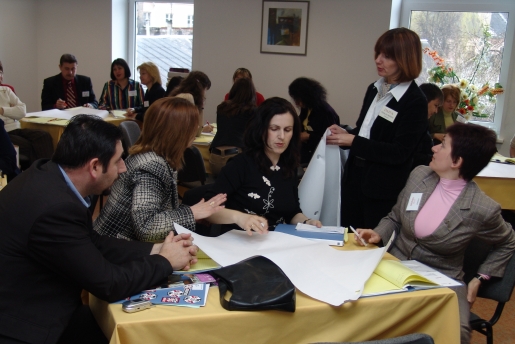
Workshop in Vilnius, 2005
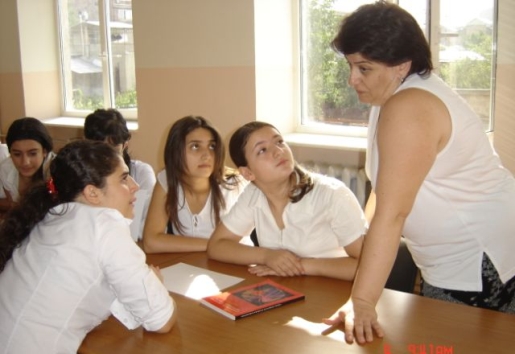
Lesson of anti-corruption education at school #43, Yerevan, Armenia, 2007
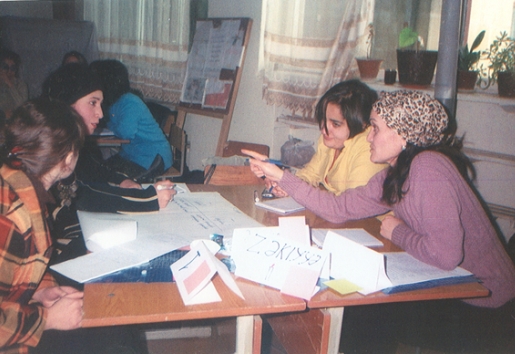
Teacher training at school #4, Lenkoran, Azerbaijan 2007
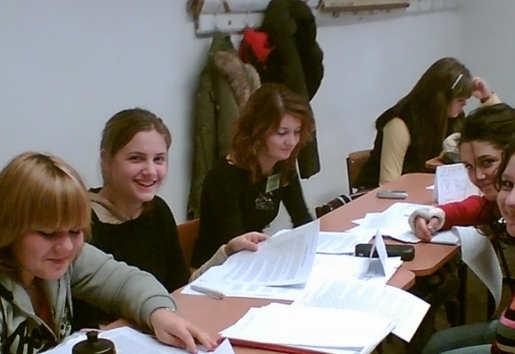
Lesson of anti-corruption education at N. Balcescu High School, Cluj Napoca, Romania
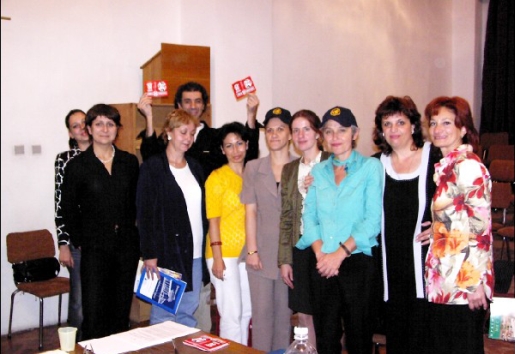
Bulgarian teem meeting with Lithuanian experts, Sofia, Bulgaria, 2006
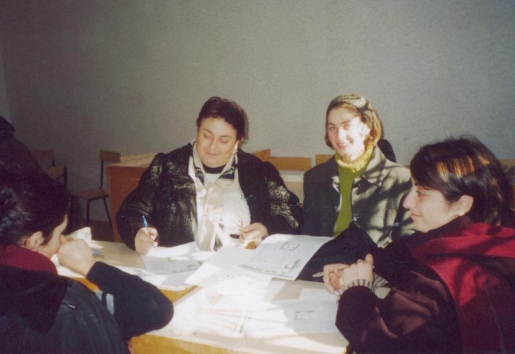
Training “Anticorruption Education at School”, Georgia, 2007