

Project No. SFMIS Nr. VP1-2.2-ŠMM-10-V-02-017
Project duration: 23 January 2013–23 March 2015
Project funders: the European Social Fund and the budget of the Republic of LithuaniA
Project coordinator: Modern Didactics Centre
Project partners:
Mažeikiai „Žiburėlis“ Primary School
Molėtai Gymnasium
Šilutė First Gymnasium
Vilnius Simonas Daukantas Progymnasium
Vilnius „Vyturys“ Primary School
Lithuanian Scouting
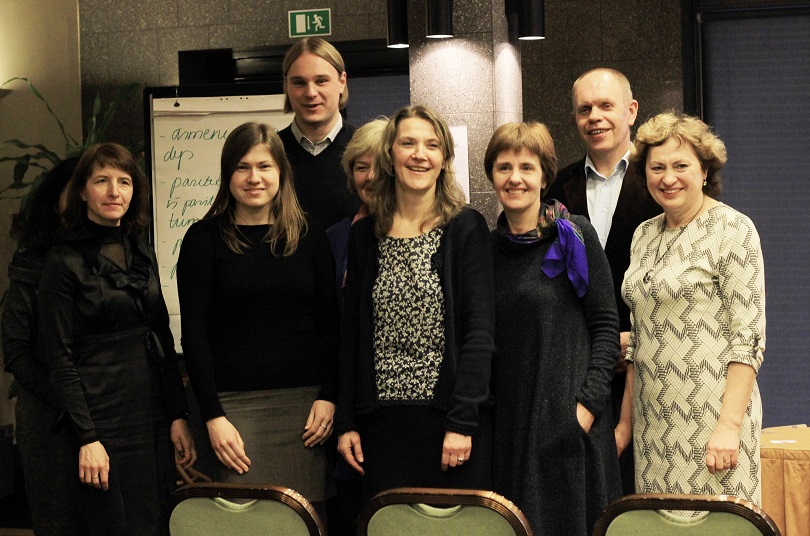
Project team
PROJECT RELEVANCE
The ability to think critically in an information society is regarded as one of the most important core competencies, manifesting as the ability to accept and verify various assumptions, analyze different perspectives, make informed decisions, and provide arguments. Critical thinking, which gives meaning to teaching and learning, creates all the necessary prerequisites to understand, interpret, discover, and comprehend the problems of societal development, ensuring the preparation of an effective mechanism to solve them under optimal conditions. The need and aspiration to cultivate critical thinking are clearly expressed in Lithuania’s strategic education documents; however, the development of critical thinking has not yet become a daily educational practice. It is not consistently implemented as an integrated system, there is a lack of professional specialists and experience, and different approaches and attitudes toward education still prevail.
The development of critical thinking is typically associated with formal education. There is a lack of knowledge and examples of how critical thinking manifests and can be cultivated in a non-academic environment. In Lithuania, a systemic approach to non-formal education is lacking, and activities focused on developing thinking skills are not prioritized. No critical thinking development tools have been prepared for non-formal education activities.
Prerequisites for this project:
- The international Reading and Writing for Critical Thinking (RWCT) program, which has been operating since 1999, is methodologically sound and has been tested in general education and higher education institutions.
- Existing manifestations of critical thinking development in certain non-formal education activities—debate clubs, project-based activities, and clubs for readers, journalists, researchers, etc.
- The integrity of the educational process—the boundaries between formal and non-formal education are not always clear.
- The emerging demand from young people.
Critical Thinking for Non-formal Education: Interviews with Students
Students from Šilutė First Gymnasium share their experiences and insights after participating in a series of seminars on critical thinking: what critical thinking is, the practical benefits of critical thinking skills in life and the future, and critical thinking within the school environment.
PROJECT AIM
This project aims to develop critical thinking competences of non-formal education specialists, students, youth, parents by preparing contemporary methodical materials. Therefore the project contributes to the Conception of Non-formal Education and Children and Youth Socialization Program tasks implementation.
PROJECT OBJECTIVE
To develop programs, methodical teaching materials for teachers, members of youth organizations, recommendations for parents and to prepare multiplicators of critical thinking ideas.
PROJECT TARGET GROUPS
Teachers, specialists of non-formal education, students, administration workers of lifelong learning system.
PROJECT ACTIVITIES
Development of critical thinking non-formal education program and methodical material for specialists of non-formal education and classroom teachers
The program and methodical material will help specialists of non-formal education and classroom teachers working with students during classroom hours and underclass activities to educate independent critical thinking, to develop skills of problem solving, project activities, exploring, cooperation, and civil values and attitudes. the prepared materials will be tested during pilot trainings for specialists of non-formal education and classroom teachers.
Development of critical thinking program and teaching materials for students and members of youth organizations
The program and teaching materials will help to plan and organize activities for contemporaries or/and students of various age, members of particular organizations more purposeful. Methods and activities, proposed in the teaching materials should develop individual critical thinking abilities, expand and improve community and teamwork activities, teach to identify, analyse and solve specific problems, to develop and implement projects, to perform exploring activities, to learn of sensible leisure time forms and occasions. Prepared materials will be tested during trainings for students and members of youth organizations.
Development of recommendations for parents
Recommendations for parents will help to recognize critical thinking features, to develop and expand them communicating with children supplied with concrete advises how to do that, how to stimulate and evaluate critical thinking seeking to raise independent and responsible persons.
Preparation of critical thinking multiplicators, dissemination of experience
During the project there will be trained critical thinking multiplicators, that will gained knowledge and skills enough for succesfull critical thinking strategies applience working with adults – colleagues teachers, school administration, parents and leaders of youth organizations. Multiplicators will disseminate the good practice during the trainings at schools and informational meetings in 10 municipalities.
PROJECT INTELLECTUAL OUTCOMES
Critical Thinking Development Program for Non-formal Education Specialists and Classroom Teachers (2013)
The aim of the program is to improve and develop the competence of non-formal education specialists, extracurricular activity organizers, and classroom teachers to apply critical thinking development methodology.
Duration: 80 academic hours.
The program consists of a non-formal education content description, which clearly formulates the program’s purpose, object, and objectives. It discusses key concepts and terms, describes the topics and their duration in hours, suggests methods to be applied, specifies the competencies to be developed, and provides requirements for program implementers, a list of literature, and the necessary tools for program implementation.
Download LT
Critical Thinking Development Program for Students and Members of Youth Organizations (2013)
The aim of the program is to develop the individual critical thinking skills of students and youth organization members, to expand and improve team and community-based activities, to learn to identify, analyze, and solve specific problems, to prepare and implement projects, to conduct research activities, to learn meaningful leisure time management, and to contribute meaningfully to socially significant work.
Duration: 74 academic hours.
The program consists of a non-formal education content description, which clearly formulates the program’s purpose, object, and objectives. It discusses key concepts, describes the topics and their duration in hours, suggests methods to be applied, specifies the competencies to be developed, and provides requirements for program implementers, a list of literature, and the necessary tools for program implementation.
Atsisiųsti LT
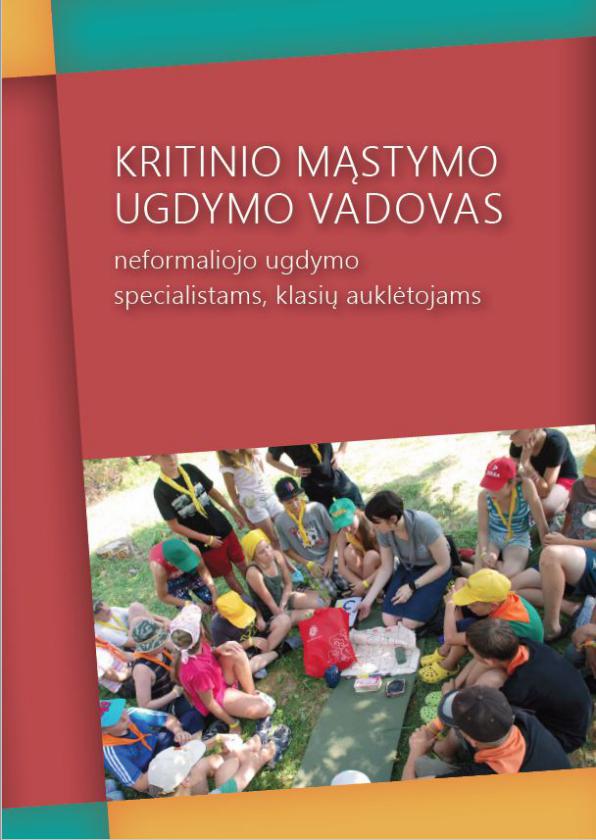
Critical Thinking Development Guide for Non-formal Education Specialists and Classroom Teachers (2014)
This guide is intended for non-formal education specialists, extracurricular activity organizers, and classroom teachers seeking to contribute to the implementation of objective 15.3 of the Concept of Non-formal Children’s Education (2012): “to develop the ability to think critically, make choices, and navigate a dynamic society.” Teachers of various subjects could also adapt and apply certain critical thinking methods presented in this publication within their lessons or after-school activities.
The aim of the publication is to develop the competence of educators to apply critical thinking development technology in non-formal education by: introducing methods and strategies that promote critical thinking; providing examples and methodologies for applying critical thinking development theory in non-formal education; encouraging the analysis and evaluation of educational activities within the non-formal education process.
This guide aims to help educators acquire skills in applying critical thinking development strategies. It consists of chapters rich in theoretical and practical examples, specific instructions, and advice. The variety of examples provided in the publication will be useful to anyone involved in the organization of non-formal education.
Download LT
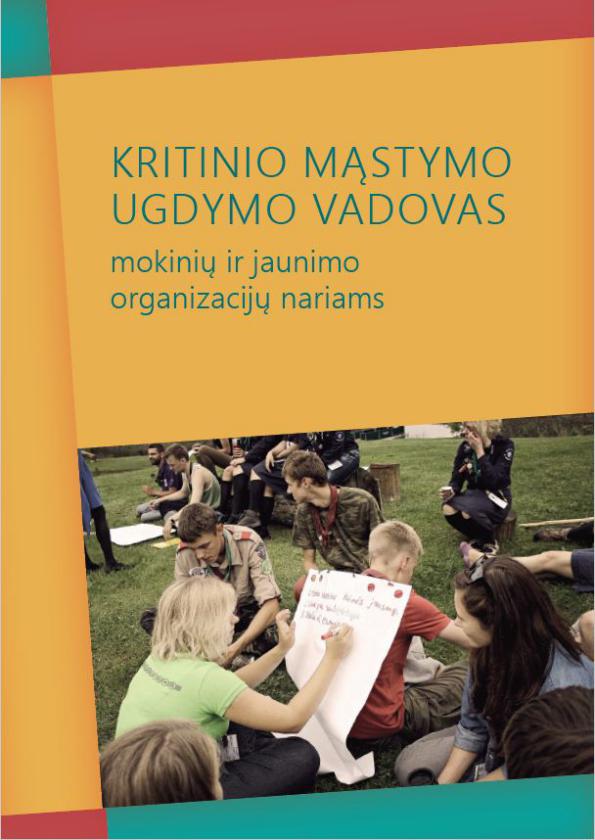
Critical Thinking Development Teaching Materials for Students and Members of Youth Organizations (2014)
These teaching materials for members of youth organizations will help plan and organize activities for peers and/or students of various ages and members of specific organizations more purposefully and meaningfully. The publication presents the concept of critical thinking, analyzes the unity of non-formal education and critical thinking development principles, and explains how to cultivate critical thinking when working with youth groups, highlighting what is important for youth group leaders and educators to know.
The methods and activities proposed in the publication aim to develop individual critical thinking skills, expand and improve team and community-based activities, and teach how to identify, analyze, and effectively solve specific problems. It also covers developing and implementing projects, performing research activities, and learning forms of meaningful leisure time to contribute to personal growth, socially beneficial work, and the development of civic attitudes and values. The provided tasks encourage reflection on the information read and its practical application, while the situational examples help users study the material independently and evaluate their own understanding.
Download LT
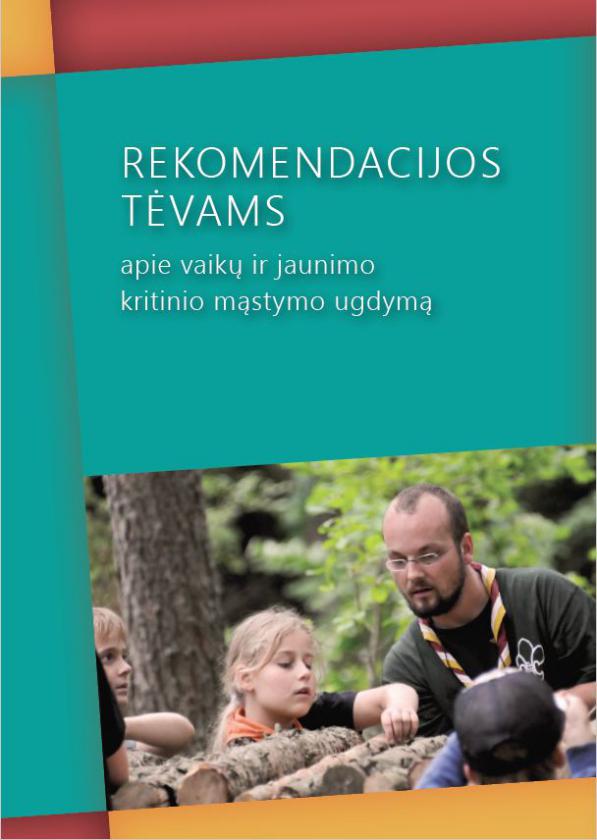
Recommendations for Parents on Developing Critical Thinking in Children and Youth (2014)
These recommendations are intended for parents raising preschool and school-age children. Their purpose is to help parents perceive, recognize, nurture, and expand their children’s critical thinking skills within the family—through conversation, discussion, reading, problem-solving, and supporting the learning process. The authors share scientific insights and long-term experience working with children of various ages and adults in the field of critical thinking. They provide examples with the hope that parents will select what is most relevant and appropriate for them and their children.
The publication consists of five chapters presenting the concept of critical thinking and the justification for its importance. It explains how to create an environment conducive to critical thinking, shares strategies for meaningful reading and discussion, provides examples of how to approach and solve problems critically, and offers advice on how to help children become independent and meaningful learners. Additionally, the publication briefly presents the results of a parental survey regarding the development of critical thinking skills at home, which partly helped determine the content and focus of these recommendations.
The authors’ primary intention is to demonstrate that critical thinking is not a complex process “managed” only by professionals, such as scientists or educators. By understanding the core principles of critical thinking, it can be developed consistently and purposefully using everyday situations and ordinary family life.
Download LT
Critical Thinking for Non-formal Education: Teaching Materials for Non-formal Education Specialists and Classroom Teachers
The film presents the concept of critical thinking and the importance of its development, as well as the application of critical thinking strategies in non-formal education activities. Participants and lecturers share their experiences of participating in the project.
Critical Thinking for Non-formal Education: A Training Tool for Students and Members of Youth Organizations
The film presents the concept of critical thinking and the importance of its development, the points of intersection between non-formal education and critical thinking development, and the levels of critical thinking cultivation. Members of youth organizations who participated in the project, along with the creators of the project’s programs and methodical materials, share their thoughts on critical thinking.
Critical Thinking for Non-formal Education: A Training Tool for Critical Thinking Multipliers
The film provides a brief introduction to the project and the methodical tools developed during its course. It analyzes the requirements for critical thinking multipliers and discusses what is essential when disseminating the ideas of critical thinking to an adult audience.
PROJECT RESULTS
- Developed critical thinking non-formal education program and methodical materials can be used by specialists of non-formal education, classroom teachers as well as subject teachers while planning ans implementing school and community projects, researches, problem identification, analysis and solution activities, voluntary activities.Critical thinking program and teaching materials for students and members of youth organizations will be used in various activities working with students of different age and developing their skills of critical thinking.
- There will be trained critical thinking multiplicators succesfuly applying critical thinking strategies working with adults and disseminating gained experience as good practice that can further the improvement the everyday work of teachers, specialists of non-formal education ans members of youth organizations.