Project No. K2018-VB-MO-01
Project duration: 19 April 2018–1 May 2019
Project financed by the Ministry of Foreign Affairs of the Republic of Lithuania under the Development cooperation and democracy promotion programme
Project coordinator: Modern Didactics Centre
Project partner: Educational Centre “Pro Didactica” (Moldova)
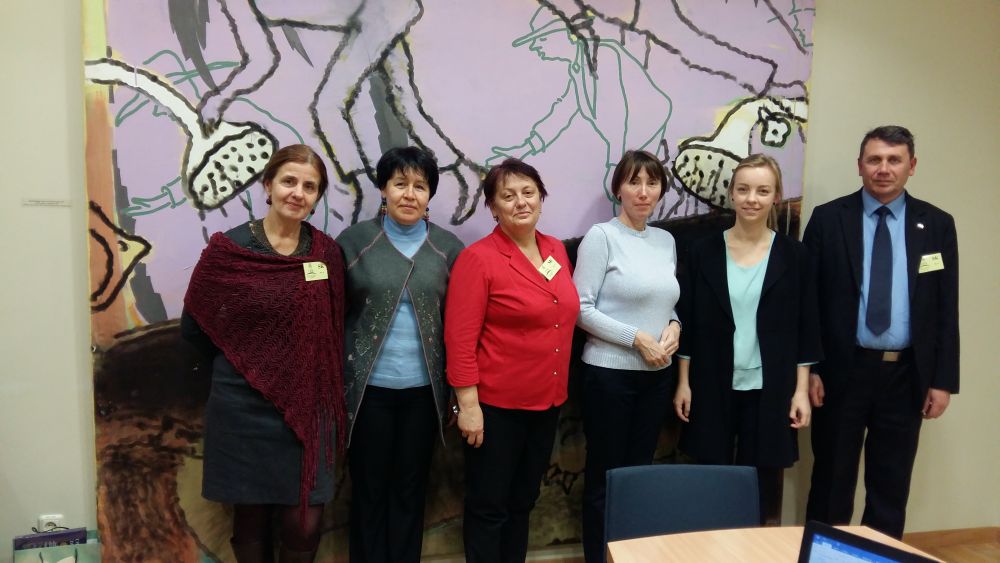
Project team
PROJECT RELEVANCE
The Republic of Moldova is a country that initialed the Association and Free Trade Agreement with the EU in 2013. European integration processes in the Republic of Moldova encompass various areas of public life, including education. A new Law on Education (2014) and the Education Strategy 2014–2020 have been approved; general and higher education curricula are being reviewed, textbooks are being updated and improved, and new teaching tools are being developed.
Non-governmental organizations are actively participating in the education reform efforts. The project partner—the non-governmental organization Educational Center “Pro Didactica”—whose mission is to support the principles of an open society through educational activities, is actively involved in implementing democratic changes within the education system. In 2008–2009, the “Pro Didactica” center developed, and during the joint project “European Lessons” in 2015–2016, updated a 34-hour elective program for schools titled “Education for EU Integration,” which is approved by the Ministry of Education. Currently, this program is implemented in more than 100 Moldovan schools, involving over 2,500 students aged 15–18. The inclusion of new, relevant topics would further improve the program. One of the most pertinent topics is anti-corruption education. In one of the 2014 issues of its educational journal, “Pro Didactica” published guidelines for an integrated anti-corruption education program prepared by Prof. Paslaru. These guidelines were created in cooperation with the National Anti-Corruption Center and the Modern Didactics Centre. To implement these guidelines, it is expedient to develop a special module and educational materials for students.
The Modern Didactics Centre (MDC) has been implementing initiatives for strengthening democracy and transparent governance since 2002. Together with national and international partners, original anti-corruption education programs for general education and higher education institutions have been created, and resources titled “Opportunities for Anti-Corruption Education in General Education Schools” and “Corruption in Higher Education: Attitudes, Problems, and Potential Solutions” have been published in Lithuanian, Russian, and English. These have been translated into Ukrainian, Romanian, Bulgarian, Albanian, Armenian, Georgian, and Azerbaijani. Programs and tools for NGO cooperation with local government institutions have also been developed (“Youth for Transparency” and “Youth for Transparency, or 7 Steps Towards a Successful Partnership”). Furthermore, a professional development and qualification training program for schools, “Opportunities for Anti-Corruption Education in General Education Schools,” has been prepared and implemented. MDCexperts and consultants have worked in many countries (Albania, Armenia, Azerbaijan, Ukraine, Kyrgyzstan, Kosovo, Bulgaria, Romania, Moldova), sharing their expertise in the fields of corruption prevention and anti-corruption education. In 2015, the organization’s experience was recognized as an example of best practice by Princeton University (USA) under the “Innovations for Successful Societies” research program. Commissioned by the Council of Europe, a case study on ŠDC’s anti-corruption education programs was prepared and published: “Advocating for Honesty and Transparency. Anticorruption Education Initiatives in Lithuania” (2015).
It is expected that the continued successful cooperation between the MDC and the Educational Center “Pro Didactica” will create a strong partnership, and that MDC’s consultations and shared experience in anti-corruption education will contribute to the implementation of democratic changes in the Moldovan education system.
PROJECT AIM
The project aims to contribute to the implementation of corruption prevention activities in the Republic of Moldova by fostering conscious, critical-thinking, and responsible citizens, and by developing and implementing anti-corruption education tools for general education schools.
PROJECT OBJECTIVES
- To develop and pilot an anti-corruption education module for the civic education course “Education for EU Integration” dedicated to teachers.
- To develop and pilot learning materials for students.
- To create information dissemination and mutual support tools.
PROJECT TARGET GROUPS
- The project is intended for teachers of the “Education for EU Integration” course and all students in the general education system (aged 15–18) who are studying the principles of civic education and/or have chosen the “Education for EU Integration” course.
- The indirect target group includes stakeholders (other NGOs, state institutions involved in corruption prevention activities, etc.).
PROJECT ACTIVITIES
1. Anti-Corruption Education Module for the “Education for EU Integration” Course
The project partner, Educational Center “Pro Didactica,” originally developed a 34-hour elective program for schools titled “Education for EU Integration” in 2008–2009, which was approved by the Ministry of Education of the Republic of Moldova. By 2010, it had been adopted by over 100 general education schools across various regions of the country. In 2015, during the implementation of the “European Lessons” project, the program was updated and supplemented with new relevant topics.
As part of the current project, the curriculum has been further expanded with a 5-hour anti-corruption education module. The following new distinct topics were developed:
- “International and National Structures for Monitoring and Combating Corruption”.
- “Failure to Oppose Corruption is Support for It”.
- “Corruption: An ‘Invention’ of Those in Power”.
- “A Brief History of Corruption. Case Study: Corruption in the Soviet Economy”.
- Extracurricular activity: “Corruption Through the Eyes of Humorists”.
Integrated topics were also prepared for other subjects:
- Civic Education (Grade 8): Module “Personal Development and Career Education”; Topic: “Sources of Personal Income. Legal and Illegal Sources. Risks Associated with the Illegal Accumulation of Income.”
- Romanian and World History (Grade 11): Topic: “The Rule of the Phanariotes [leaders of the Greek Orthodox Church and merchant aristocracy with significant privileges] in the Romanian Lands”; Reference to anti-corruption education: The history of corruption in Romanian lands and a corruption-tolerant society.
A lesson plan has been developed for each topic, specifying the learning objectives, methods, tools, educational activities, assessment of learning outcomes, and references to additional materials. The topics were selected to ensure students encounter the phenomenon of corruption from various perspectives. The aim is for students to be familiar with anti-corruption efforts in Moldova and the roles of international monitoring and anti-corruption institutions, to understand and explain how corruption affects citizens’ lives and security, to recognize elements of corruption in everyday situations, to develop the ability to resist corruption, to understand the historical context of the phenomenon in their country and recognize its consequences in modern life.
Furthermore, the project demonstrated that this subject can be addressed not only within formal education but also through non-formal education, where activities can be organized by senior students, university students, volunteers, and class tutors.
2. Teacher Training
The first training session took place on September 15, 2018, at the “Pro Didactica” educational center in Chisinau. It was attended by 16 subject teachers from various general education schools. During the training, the project was introduced alongside the legal framework for anti-corruption education, the anti-corruption strategy, and the significance of anti-corruption education at the general education level. Teachers worked with the modular, integrated, and extracurricular (non-formal) anti-corruption content developed by experts: they discussed and detailed the objectives of anti-corruption education, analyzed the prepared teaching materials, searched for effective teaching methods, and provided recommendations for improving the course. The educators noted the significance and timeliness of the course, as well as the teachers’ readiness to teach this topic to students.
The second training session was held on March 22, 2019. It was attended by 16 educators from the participating educational institutions. They were presented with the project results, analyzed the learning materials for students, discussed their potential applications, and submitted proposals. The teachers shared their progress in implementing the anti-corruption education module, highlighted challenges, and exchanged achievements. The educators noted a high level of interest among teachers in teaching this topic and their readiness to work with the developed materials. Emphasizing this theme helps clarify the gravity of the corruption situation in the country and highlights the need to educate young people, teachers, and parents.
However, the teachers observed that not all school administrators and parents are equally eager to engage in a project involving such a complex and sensitive topic. They also suggested that the developed materials should reach government officials—as many decision-makers as possible. Current problems demand a strong anti-corruption perspective and a corresponding approach, as required by the overall national situation, given the high level of corruption in the country. Consequently, the teachers propose continuing the project, involving new educators, encouraging them to integrate anti-corruption education into their subjects, utilizing the teaching materials, and disseminating the project results as widely as possible at the national level.
3. Visit of Moldovan Experts to Lithuania
On November 26–27, 2018, project experts from Moldova visited Lithuania. The delegation included Viorica Postica, Project Coordinator at the Educational Center “Pro Didactica”; Rodica Esanu, History and Civic Education teacher at “Columna” Lyceum in Chisinau; Sergiu Mandis, History and Civic Education teacher at “Stefan Holban” Lyceum in Carpineni-Hancesti; and Eugenia Negru, History and Civic Education teacher at “Prometeu” Lyceum in Chisinau.
The experts visited Anykščiai Jonas Biliūnas Gymnasium, Anykščiai Antanas Baranauskas Primary School, and Šalčininkai Jan Sniadecki Gymnasium. By participating in projects organized by the Modern Didactics Center (ŠDC), the schools in Anykščiai have been involved in anti-corruption education activities since 2002 and contributed to the development of an integrated anti-corruption curriculum for general education schools. These schools also belong to the Integrity Schools Network (Sąžiningumo mokyklų tinklas). This is an informal initiative launched on December 9, 2014, which any Lithuanian school fostering the values of honesty and transparency can join. The goal of the network is to enable schools to more easily plan and implement integrity initiatives, find like-minded partners, and share best practices.
In Anykščiai, the participants observed a 6th-grade ethics lesson titled “Fostering Honesty” taught by teacher Daiva Tručinskienė and an 11th-grade ethics lesson titled “Moral Dilemmas” taught by Daiva Kuprionienė, and met with the school community. At Šalčininkai Jan Sniadecki Gymnasium, the guests took an interest in the school’s multicultural context, cultural integration, and anti-corruption education campaigns. They also explored transparency initiatives implemented in daily school life, such as:
- Tripartite school-parent-child agreements that encourage shared responsibility and greater parental involvement in the educational process.
- The School Council, composed of teachers, parents, and students.
- The Student Council, electronic gradebooks, and other digital tools.
The Moldovan experts also met with representatives of the Development Cooperation Department of the Ministry of Foreign Affairs of the Republic of Lithuania. During this meeting, they presented the project activities and the newly developed anti-corruption education module for general education schools, while sharing their experiences on integrating anti-corruption themes into their respective teaching subjects.
4. Preparation and Piloting of Learning Materials for Students
Drawing on their experience in Lithuania and having familiarized themselves with the materials developed by Lithuanian teachers, the project experts prepared learning materials tailored for their own country’s schools. They sought content that would be engaging and relevant to specific age groups, grounding it in the local historical-cultural context, current political realities, and Romanian literary texts. A total of nine learning material exemplars were developed. Each exemplar specifies the target grade, the subject in which it can be applied, its connection to anti-corruption education, and guidelines on how to work with the provided material. These resources demonstrate how diverse sources can be utilized for civic education, with an emphasis on fostering critically thinking, honest, and responsible personalities and forming a solid value system.
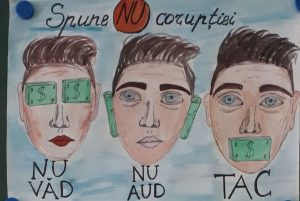
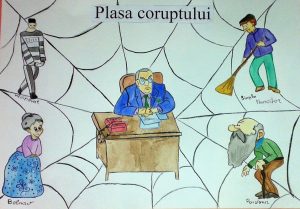
The anti-corruption education module and the developed learning materials were piloted in 20 schools across the country during both formal and non-formal sessions. 22 teachers successfully integrated anti-corruption aspects into their subjects, selecting themes and materials relevant to the students’ age. Schools also organized community-wide events—such as meetings with school boards and parents, as well as art exhibitions—which helped reach a broader audience and increase youth engagement by bringing the topic of corruption to the forefront.
Teachers noted that such sessions lead to a deeper understanding of the phenomenon of corruption. Students shared that while they hear about corruption and bribes to doctors or police officers at home, they often do not know how to evaluate these occurrences. By analyzing situations, historical examples, and current events during lessons, students become familiar with manifestations of corruption in politics, education, medicine, the public sector, and daily life. This process helps them understand the impact of corruption on both the country and the individual, shaping their values and personal determination.
Significant attention was devoted to fostering civic-mindedness and integrity by discussing concepts such as justice, transparency, honor, dignity, and the traits of an honest employee. In their feedback, students emphasized that such sessions are necessary, stating that education is a vital tool for combating corruption and changing people’s mindsets, and expressing their desire to live in a transparent country.
PROJECT INTELECTUAL OUTPUT
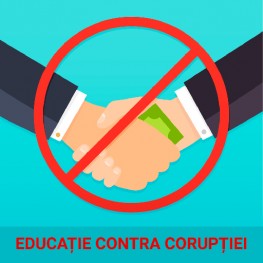
Anti-Corruption Education Module for the Civic Education Course “Education for EU Integration” (2019)
The Educational Center “Pro Didactica” has supplemented the country’s existing elective school program, “Education for EU Integration,” with a specialized anti-corruption education module. The developers sought materials that are engaging and relevant to specific age groups, drawing on the local historical-cultural context, current political realities, and Romanian literary texts.
New topics were developed for standalone lessons, integrated subject lessons, and extracurricular activities. A comprehensive lesson plan was prepared for each topic, detailing learning objectives and methods; required tools and educational activities; assessment of learning outcomes; references to supplementary materials.
The topics are strategically selected to introduce students to the phenomenon of corruption from multiple perspectives. The module aims to ensure that students understand how corruption is being combated in Moldova and identify international monitoring and anti-corruption institutions, can explain how corruption impacts the lives and security of citizens, are able to recognize elements of corruption in everyday situations and possess the skills to resist it, understand the historical roots of corruption in their country and observe its consequences in contemporary life.
Furthermore, the project demonstrated that this subject can be effectively addressed through both formal and non-formal education, where activities can be led by senior students, university students, volunteers, or class tutors.
Download RO
PROJECT RESULTS
- An anti-corruption education module was developed for the civic education course “Education for EU Integration.” The module was pilot-tested in 20 schools across the country through both formal and non-formal sessions. 22 teachers successfully integrated anti-corruption aspects into their respective subjects. Over 1,200 school leaders, administrative staff, and teachers were introduced to the module and learning materials and were trained on how to use them. More than 1,000 students (grades 7–12) participated in anti-corruption activities during lessons and extracurricular programs. Additionally, over 400 parents were informed about anti-corruption education. An Integrity Schools Network was initiated in Moldova, and project results were actively disseminated, establishing an information-sharing and mutual support network.
- This project contributes significantly to national anti-corruption initiatives in the Republic of Moldova by emphasizing that education is the most vital investment in the fight against corruption. Project organizers and participants stress that education is essentially the only way to reduce this social problem while simultaneously shaping the value systems and civic stances of young people. Concern over the prevalence of corruption in the country has led teachers to take responsibility for the future of their students.
- The project demonstrated that an active, civic-minded teacher can integrate anti-corruption education into their subject, conduct research, and analyze problems to help students understand reality while fostering integrity, morality, and knowledge of civic rights and duties. Since anti-corruption education involves changing attitudes—a process that occurs slowly—consistent effort is required.
- The developed teaching tools, recommendations, and the newly established Transparency Schools Network, supported methodologically by the project partner “Pro Didactica,” provide teachers with the necessary instruments for this long-term work. Although the full impact of the project will only become apparent in the long run, experts have already observed high levels of teacher interest and readiness to work with the materials. Students themselves noted that such sessions are necessary and expressed their desire to live in a transparent country.
Students paintings