



Project duration: 2004–2007
Project co-funder: European Commission
Project coordinator: Groupement d‘Interet Public Formation Continue – Insertion Professionnele de l‘academie de Clermont-Ferrand (France)
Project partners:
Šiuolaikinių didaktikų centras (Lithuania)
Centro de Education de Personas Adultas de Panafiel (Spain)
ARCA-Forumul Roman Pentru Refugiati si Migranti (Romania)
Centro De Educación De Personas Adultas De Olmedo (Spain)
Kek Dimou (Greece)
REKVAL sro (Czech Republic)
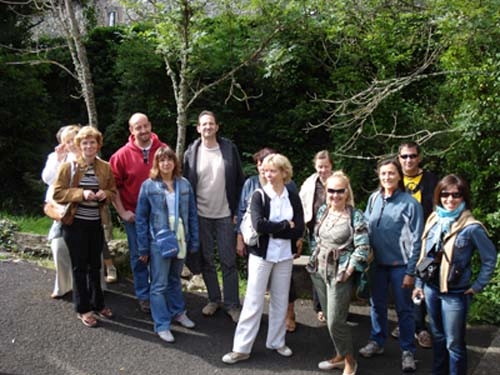
Project team
PROJECT RELEVANCE
Travelers are people who do not lead a sedentary lifestyle. They include migrants, travelers, people engaged in seasonal work, and members of ethnic and other minorities. They travel constantly within their own country or abroad due to the nature of their work or activities, or for other economic, social, and cultural reasons. The general education system is not adapted to young travelers who attend school irregularly and does not offer them alternative learning methods. Young people often leave school without having acquired the education necessary for vocational training. The system of further vocational studies is also not adapted to adults from traveling communities. Due to their temporary stay in one place, travelers lack the conditions—and often the desire—to integrate into the local community.
PROJECT AIM
Encourage the participation of members of the Travelling Community (migrants, travellers, seasonal workers, and members of ethnic and other minorities), particularly young adults (aged 16–25), to participate in the general education and vocational training system, and to facilitate their professional and social integration.
PROJECT OBJECTIVES
- Analyze the learning needs of traveling people.
- Describe examples of successful Roma education in schools and vocational training systems in the project partners’ countries, and disseminate their positive experiences.
- Provide recommendations on teaching methodologies and the adaptation of the educational environment to take into account the specific learning needs of Roma.
PROJECT TARGET GROUPS
- Organizations that work with or are associated with traveling people.
- Educational institutions attended by traveling people.
- Trainers of traveling people.
- Institutions that employ traveling people.
- Indirect target group – traveling people. Some examples of best practices and suggestions for adapting training may also be suitable for other social groups at risk of marginalization: people who have dropped out of general education schools, young people without an education, mothers, and so on.
PROJECT ACTIVITIES
The project was implemented in collaboration with institutions in each partner country interested in the education and social and professional integration of travelling people (primarily Roma). The aim was to identify the educational challenges that prevent Travellers from successfully integrating into society. To this end, studies were conducted in 2005 in the project partner countries, analyzing the specific needs of Travellers related to the education and vocational training system. Thirty-one institutions participated in the study: 15 in France, 4 in Lithuania, 2 in Romania, 4 in Spain, 3 in the Czech Republic, and 3 in Greece. A total of 39 representatives of the Traveler community were interviewed: 15 in France, 5 in Lithuania, 5 in Romania, and 14 in Spain.
The project partners compiled a Best Practices Guide—they collected and described examples of successful learning for travelling people in schools and vocational training systems in their respective countries, using a standardized format. A total of 19 descriptions were submitted: 3 from Lithuania, 6 from France, 5 from Spain, 3 from Greece, and 2 from the Czech Republic.
Seminars were also organized in which representatives of educational institutions, trainers, and representatives of the traveling people communities analyzed educational methods already in use or planned for implementation, with the aim of improving the professional qualifications and social integration of the traveling people.
The third year of the project (2006–2007) was devoted to examining the challenges of professional integration for Roma women. The pursuit of gender equality is one of the priorities of national policy. Our project helped us understand what hinders the implementation of the principle of gender equality in the professional integration of the Roma community. Lithuania, Spain, France, and the Czech Republic surveyed women from their respective Roma communities, mediators, and social workers, and provided summaries of the interviews. The interview data were summarized in comparative tables. Based on the results of the analysis of the educational needs assessment, the partners developed proposals for improving the vocational education of women in the Roma community. The project partners identified didactic methods and specific approaches that should be developed and adapted for the vocational training and labor market integration of Roma women. Fourteen key challenges were identified, and solutions for each were proposed.
During the project, partner meetings were held to analyze available information and explore avenues for further collaboration.
PROJECT INTELECTUAL OUTPUT
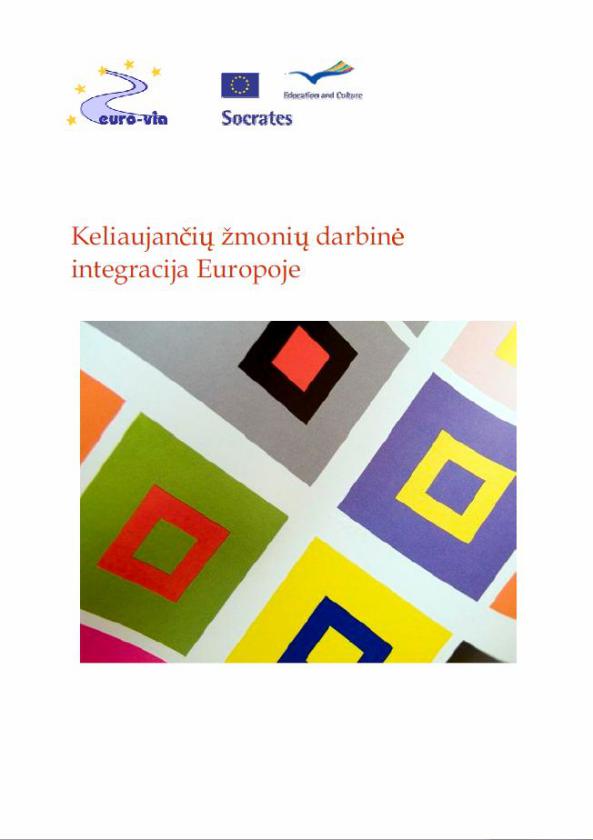
Vocational Integration of Travelling People in Europe (2007)
This publication summarizes the research conducted and materials developed during the project, which are aimed at addressing the challenges of integrating traveling communities, particularly the Roma, into the labor market. The book analyzes the specific learning needs of Roma and the reasons why the traditional education system often remains inaccessible to them. The authors present case studies of best practices, sharing successful examples of vocational training from Lithuania, France, Spain, and other countries. Particular attention is paid to the situation of traveling women, discussing their cultural role within the family and the challenges they face in achieving economic independence. The publication also provides specific recommendations for teachers, social workers, and employers on how to improve educational methods and reduce societal stereotypes. This is valuable methodological material for organizations seeking to promote the inclusion of groups experiencing social exclusion.
Download LT
PROJECT RESULTS
- The institutions participating in the project had the opportunity to share best practices and adapt them to their own countries.
- The project will promote cooperation among government agencies, regional and local communities, and organizations representing target groups in addressing the challenges of integrating travelling people.
- It is expected that the materials developed during the project, reflecting the experiences and challenges of various countries in this area, will be useful to organizations interested in the social integration of Travellers in each country participating in the project.
- It is expected that the project will benefit Lithuania by drawing public attention to the educational challenges faced by this group of people, mobilizing the organizations that represent them, and seeking more effective ways to facilitate their professional and social integration into society.

Funded by the European Union. Views and opinions expressed are however those of the author(s) only and do not necessarily reflect those of the European Union or the National Agency. Neither the European Union nor National Agency can be held responsible for them.