
Project duration: 1 January–31 December 2006
Project co-funder: European Commission
Project koordinator: Centrum Edukacji Obywatelskiej (Lenkija)
Project partners:
Modern Didactics Centre
Special Investigation Service of the Republic of Lithuania
Transparency International Lithuania office
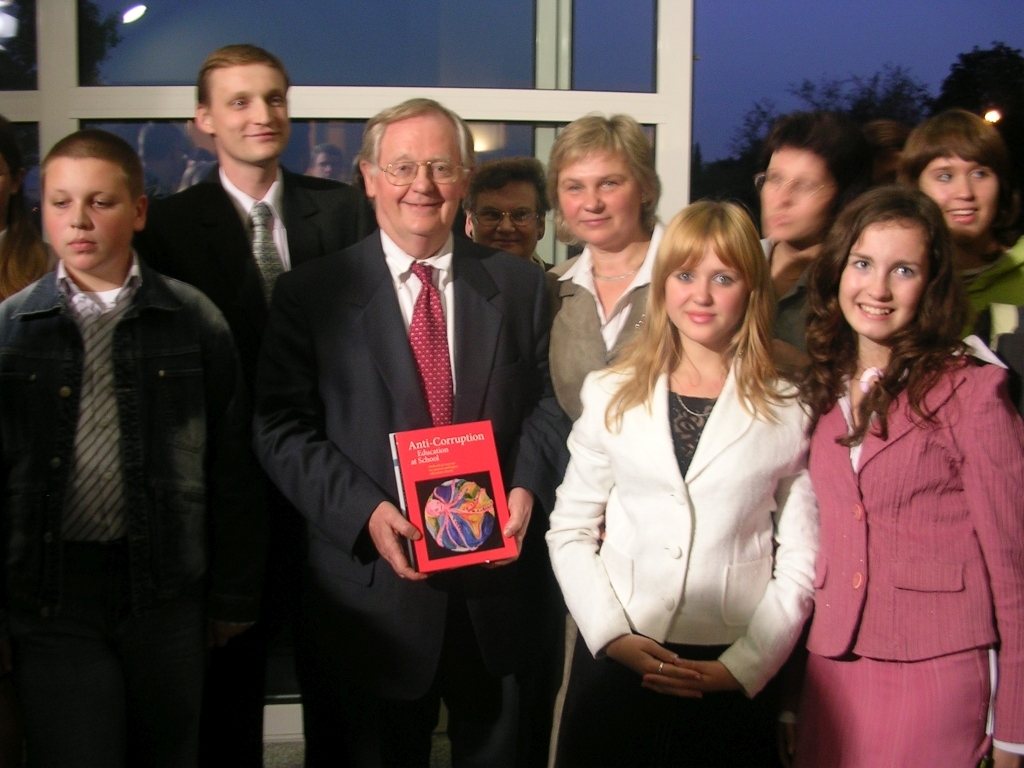
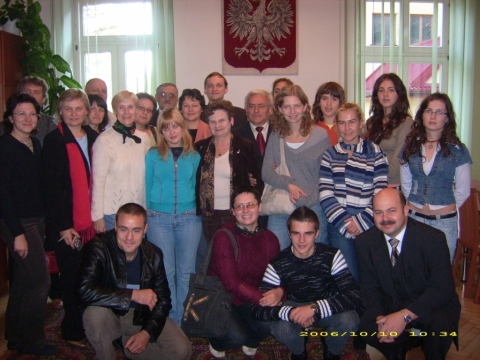
Reception in US Embassy in Poland. At the centre – Ambassador Victor Ashe
PROJECT RELEVANCE
Low client awareness and lack of general access to public information
In theory, basic information about the work of local authorities is open and accessible to the local community of many towns and villages. This access, however, is usually difficult and those more persistent in reaching it may have problems with getting even the least of it. They are often handled impolitely and experience illegitimate resistance of the officials. There are also other difficulties of different character: the language and form of documents are hardly comprehensible to an average citizen. Statistics on the number of visitors to the Public Information Bulletin’s Web site show that this is still not the most efficient way to get through to the people. Therefore, the people must be given actual information, not just an opportunity to reach for it. School is a place where students – potential clients of offices and prospective public life consumers – should be prepared to make a correct interpretation of the obtained information and to make a right use of it.
The sense of helplessness in the face of corruption and similar phenomena
Many young Polish and Lithuanian people believe that corruption is ubiquitous and doing anything about it makes little sense. Often it is suspected that many actions (of local government and its offices) are undertaken not for local public interest but for other, usually private interests and goals. It is indispensable to convince the young people that corruption is not a disease troubling the office and local authorities as such but rather single individuals, and that the authorities do really want their administration to respect the principles of ethics. It is also necessary to increase the awareness of the young people regarding access to public information, introducing procedures and regulations eliminating bias and conflict of interest within the local government, and also to promote ethical attitudes in Polish public life. In this way, the young people will be prepared for an efficient and true participation in the public life of their communities. The more aware individuals will make better allies in eliminating any symptoms of corruption. They will also be more critical about slander and attempts to discredit public officials.
Lack of mutual trust and co-operation between the office and its potential client
Effective communication between local authorities, its organs, and the local community is a very difficult task. It requires finding adequate communication channels, providing enough time, using the right language, building confidence on the line authorities-people. A point often made against undertaking such efforts is that the residents are rarely motivated by public goals but rather follow their individual interests. Even if this is so, the fact does not release the local government from its duty to permanently consult its activities with interest groups existing within the local community.
The Programme is an innovative pilot-stage project in local public policy. The project-proposed model for monitoring the work of public offices and institutions in co-operation with local government, and the way of promotion mechanisms of social control through education as well as methods for preparing young people to use such solutions will be suitable for promotion in other counties and municipalities in Poland and Lithuania. The Programme promotes school as a partner of local authorities in communicating with the rest of local society. This model of partnership helps to work out such methods and tools which in future can effects to the authorities-local society relations. It also helps to break the mutual trustless within. In Program schools and local governments responsible for them are equal partners in education and disseminating good practices.
Centre for Citizenship Education and the Modern Didactics Centre have ample experience in running anti-corruption programmes. Both organisations have during the recent years developed education materials intended directly for school students and teachers to address corruption and its control. With its regular contacts and study tours, this project will be important for the exchange of experience and the developed tools.
PROJECT AIM
To develop attitudes and meet expectations of young citizens in building the transparency and accountability of the public life on the local level, through education and through encouraging community cooperation on local and international levels.
PROJECT OBJECTIVES
- To engage local authorities and schools in common building and realizing the local policy of public administration monitoring.
- To present the social control mechanisms in the subject of transparency and ways of corruption prevention for the students.
- To cooperate with local authorities and schools in developing the local system of getting and disseminating information on the public institution functioning.
- To build the international experience exchange and means of dissemination social control mechanism through education forum.
PROJECT GROUPS AND BENEFICIARIES
Direct target groups:
- Youth: the project’s direct addressees are young people aged 13-18 years (students of gymnasium schools) in Poland and Lithuania living in places covered by the Programme, those who will one day become full citizens taking part in their local community life, also as the potential clients of offices in their localities (3900 students).
- Local authorities chosen for the project: direct beneficiaries are local governments invited to co-operation (10 in Poland and 3 in Lithuania) their representatives who, assisted by the planned activities, are expected to build a positive image of the office and to work to improve confidence in public institutions (13 local governments, 65 representatives).
- Teachers from the schools that will take part in the project: the Programme’s intermediate beneficiaries are also school teachers involved in its implementation and all the residents of counties and municipalities covered by the Programme, who will become addressees of activities carried out by school students and local government staff members (260 teachers).
- Local community: all inhabitants in those regions where the project will be conducted (3000 adult inhabitants).
The project was implemented in the municipalities of Ełk, Katowice, Koszalin, Limanowa, Olsztyn, Siemianowice Śląskie, Tarnowskie Góry, and Żory in Poland, and in Anykščiai, Elektrėnai, and Mažeikiai in Lithuania. In each of these locations, a mixed group of local leaders was formed, consisting of teachers, students, and municipal officials. Each group carried out the project’s planned activities in their respective municipalities and developed their own strategies for implementing transparent public policy and monitoring anti-corruption efforts.
PROJECT ACTIVITIES IN LITHUANIA
3 municipalities were involved into this project: Elektrenai Municipality, Mazeikiai District Municipality and Anyksciai District. In total there were 12 schools, 57 students, 22 teachers, 2 social pedagogues, 11 servants of municipalities directly participated in the project.
1. Information meetings
Information meetings in municipalities were a starting point to implement further activities. Actually, during the meetings it was formed a background for local groups. During the information meetings the aim and foreseen activities of the project were introduced to participants.
2. Workshops for local groups
Participants were acquainted with theory of practice of strategic planning. During workshops local groups started to plan activities and discuss the ideas of youth projects. The workshops for local groups were very important, because participants were empowered to develop their projects later.
3. Workshops for teachers
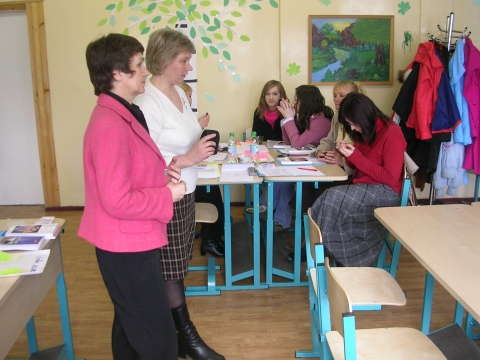
There were organized 6 workshops (2 in each municipality) on anti-corruption education and project method. Workshops themes were chosen by participants. They acquired skills and knowledge how to integrate anti-corruption education into their subject teaching and how to apply project method in classroom activities.
4. Open lessons
There were delivered 14 lessons in 8 participating schools. These lessons demonstrated the possibilities of civic education themes integration to other teacher subjects. Students were interested in these lessons. Students were acquainted with theory and practise of transparency and the ways in which it is possible to implement social control mechanisms in public institutions.
5. Visits to public institutions
This activity was especially interesting for students – they have been acquainting with work of public institutions servants directly, have a possibility to discuss with them, during these visits students collected information and materials necessary for their projects. This activity strengthened communication between schools and local authorities and engaged in common building and realizing the local policy of public administration monitoring. There were 12 visits organized.
6. Youth projects
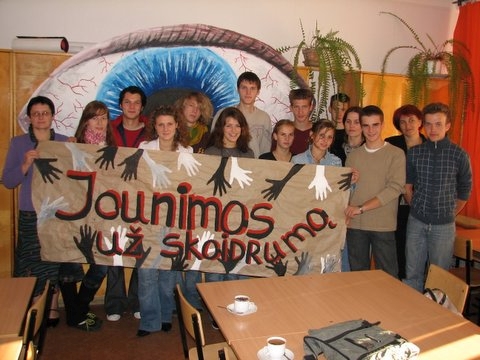
Development of projects were highly interesting and useful activity for students. During this activity they were involve into analysing of transparency and accessibility of public institution activities and solving important issues of public life. It was a great input into rising of students’ public awareness. Students implemented 14 projects choosing themes of transparency and publicity of public institutions, transparent relations between people and institutions, public purchase, evaluation system at school, under-ages employment, cooperation of school and public institutions.
7. Research of public opinion
9 researches were performed. Students gained a lot from this activity learning to organize public opinion research – to prepare research tools, collect and analyse data. This activity met one of project tasks: to engage local authorities and schools in common building and realizing the local policy of public administration monitoring.
8. International study visits
During local study visits, organised in Poland and Lithuania, both Polish and Lithuanian teams have a possibility to introduce their regions, schools, and project activities. Study visits strengthened communication between project teams, gave an opportunity to show achieved results and to share experience.
9. International conferences
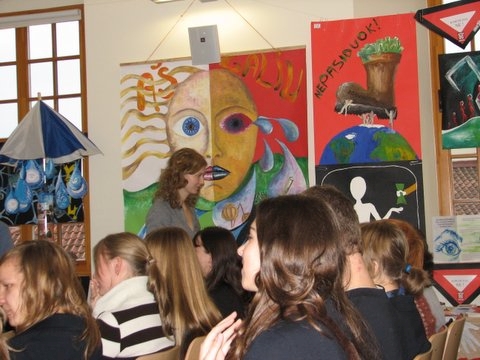
International conference was organized on 8 October 2006 in Warsaw and on 7 December 2006 in Vilnius. Participants finalized and presented project results to each other discussed actual issues of pubic life. International conference gave an opportunity to build the international experience exchange and means of dissemination social control mechanism through education forum.
10. Educational materials
Educational publications Youth for Transparency or 7 Steps towards Effective Communication and Youth for Transparency: Lithuanian experience were based on the project implementation experience and using project materials and examples. It will serve as guidelines for local communities, youth organizations initiating projects in cooperation with local authorities, state institutions, NGO and other institutions fro their community.
PROJECT INTELLECTUAL OUTPUTS
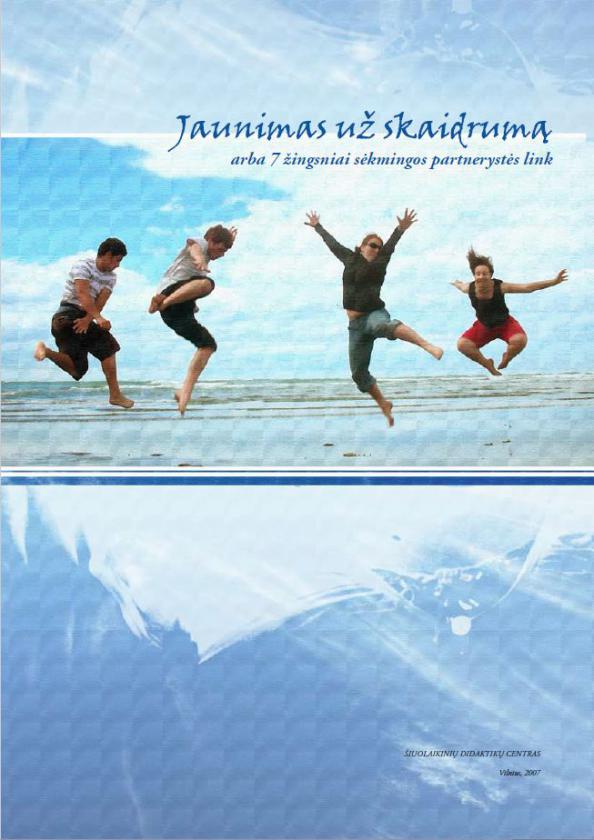
Youth for Transparency or 7 Steps towards Effective Communication (2007)
This publication serves as methodological guidelines that school or local communities and youth organizations can follow to initiate and implement collaborative projects together with municipal administrations, state institutions, non-governmental organizations, or other community institutions. Based on the experience of the project’s implementation, it explains how to start and successfully carry out projects of a similar nature, how to plan every step, what challenges might arise, and how to avoid them. The appendix of the publication provides examples of youth projects and other activities implemented during the project.
Download LT
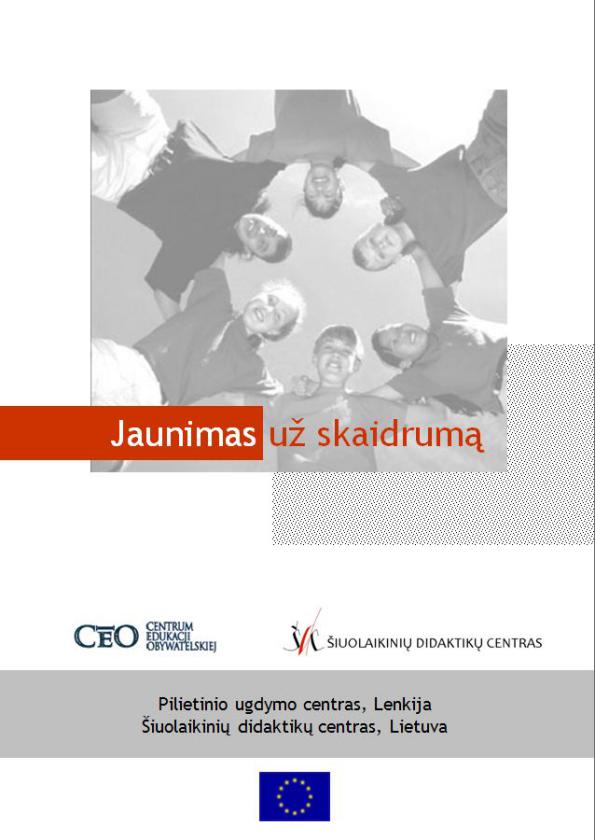
Youth for transparency (2006)
This publication describes project Youth for Transparency activities in municipalities, team building, cooperation of schools and local authorities, students visits to public institutions, youth projects, presentation of project results to local community.
PROJECT RESULTS
- Improving the awareness of how public institutions are functioning and developing the skill of using public controls mechanisms will prepare the young people for their full citizenship.
- The Programme will also allow the young people to amass new experience, gain new skills such as, the skill of co-operation, organization, managing and monitoring projects.
- Getting the young people involved in work for public life transparency will help overcome the overwhelming helplessness and indifferent attitudes which indirectly result from a profound moral crisis in Poland and Lithuania. The young people will be aware that they can improve this situation by direct commitment to public activity. Helping them to realise that the office is accountable to its clients (school students, their parents, teachers, and the whole local community) will also strengthen their sense of being the authors and co-decision-makers.
- The cooperation between local government authorities, teachers from various counties and municipalities which was initiated by the project will be carried on for the benefit of the young people. Representatives of local authorities, teachers, students trained in the first year of the project life to carry out certain activities will then be held responsible for the continuation of all the project activities and tasks. Local government structures will be interested in introducing into their own practice all the methods developed under the project to other schools and institutions (not taking part in the first year of the project).
- A direct effect of the project will be an improved awareness of the local community, they will be quicker in identifying problems, and they will more readily come up with local proposals to solve them. The Programme proposed model for monitoring the work of public offices and institutions in co-operation with local government, as well as methods for preparing young people to use such solutions will be suitable for using in other counties and municipalities in Poland and Lithuania.
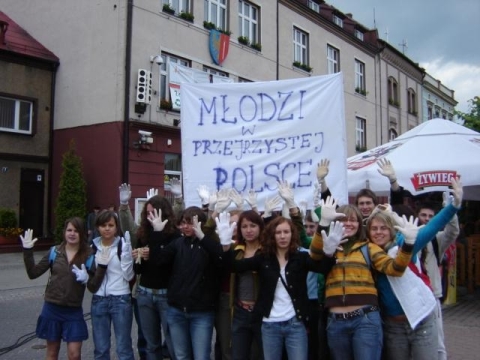
Funded by the European Union. Views and opinions expressed are however those of the author(s) only and do not necessarily reflect those of the European Union or the National Agency. Neither the European Union nor National Agency can be held responsible for them.