


Project No. 2013-1-RO1-GRU06-29565 1
Project duration: 2013–2015
Project co-funder: European Comission, Lifelong Learning Programme
Project coordinator: Reading and Writing for Critical Thinking International Consortium (Romania)
Project partners:
Modern Didactics Centre (Lithuania)
Association Munterwegs (Switzerland)
The National Association of the German Child Protection Agency of Mecklenburg-Vorpommern (Germany)
European Studies and Initiatives Center (Italy)
Grimstad Municipality Professional Development Office (Norway)
Orava Association for Democratic Education (Slovakia)
Forum for Freedom in Education (Croatia)
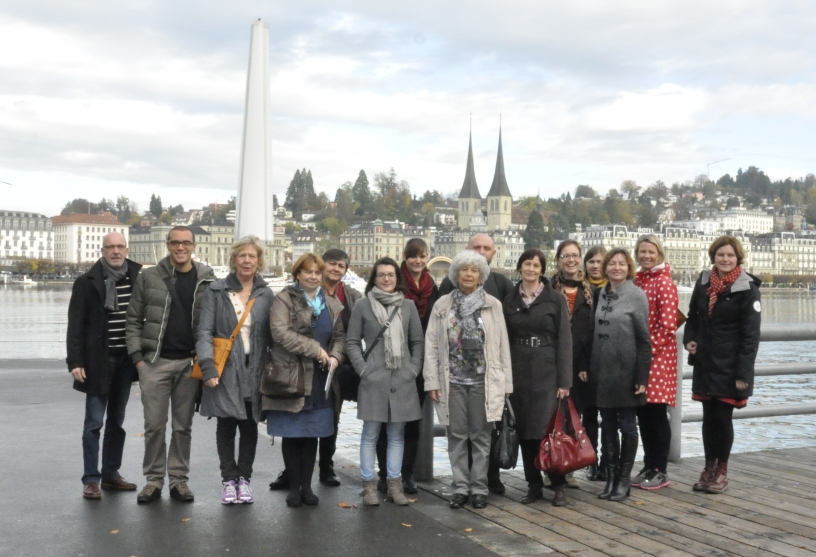
Project trainings in Bratislava
PROJECT RELEVANCE
The project partners feel there is a need for a European forum dedicated to mentors who support the integration and successful learning of school-age children. Early support for children aiming to succeed in school is crucial, and mentoring can help prevent school dropout or failure. This is precisely why organized training and development for mentors is needed.
The project partnership includes 8 organizations, 7 of which provide adult education services. We will work together to develop a mentoring program based on collaborative learning and drawing on each organization’s experience.
The partnership’s goal is to engage adults from socially vulnerable groups (the elderly, the unemployed, immigrants, refugees, representatives of ethnic minorities, etc.) into mentoring activities that benefit their communities by mentoring school-age children, thereby providing these adults with a sense of usefulness and satisfaction and strengthening their self-esteem as community members.
Based on the results of an analysis of current practices in the field of mentor training and counseling in each partner country, we will promote the transfer and development of innovative practices across all partner organizations.
The motivations of individual partners for participating in this collaborative learning initiative vary.
The Reading and Writing for Critical Thinking International Consortium (Romania) aims to learn about successful mentoring programs for a variety of target groups, develop human and pedagogical resources that would help create effective mentoring programs, and provide individuals with the opportunity to participate more actively and responsibly in the life of their communities and contribute to their well-being.
Munterwegs Association is very much looking forward to exchanging best practices in the field of mentoring methods and learning from the partners’ experience and skills. Furthermore, participation in this learning partnership and its mobility programs will be a valuable experience for many of its volunteers.
The The National Association of the German Child Protection Agency of Mecklenburg-Vorpommern aims to learn how best to prepare and use human resources to support disadvantaged children. Mentors can compensate for a lack of family support, especially in socially disadvantaged neighborhoods where many children and young people lack adequate parental guidance. The model of involving volunteers in communities is appealing because it provides support to children while empowering adult community members to act for the benefit of their community.
The European Studies and Initiatives Center (Italy) continuously seeks to discover and implement new methods aimed at empowering socially disadvantaged groups and fostering social cohesion at the local and European levels.
The ModernDidatics Center (Lithuania) aims to learn from this partnership project so that it can support day center staff by implementing a training program designed for them. Day centers provide services to children and adolescents belonging to socially vulnerable groups; they need assistance with learning and personal guidance in dealing with various situations and problems in daily life.
By joining this project, the Grimstad Municipality Professional Development Office (Norway) hopes to enrich its experience in effectively addressing issues of immigrant integration into society and supporting them through a non-formal education model based on the development of close human relationships.
The Orava Association for Democratic Education (Slovakia) aims to familiarize itself with various mentoring programs and models so that it can transfer and adapt the knowledge gained when working with socially disadvantaged groups (e.g., Roma, early school leavers, the unemployed) and thus contribute to improving non-formal learning services for socially disadvantaged groups.
The Forum for Freedom in Education (Croatia) is motivated to participate in the partnership by the need to learn how to develop a training program for unemployed young teachers, with the aim of helping them acquire new skills required in the labor market. The Forum pays particular attention to young people who are not integrated into society and do not participate fully in it due to a lack of social skills.
PROJECT AIM
Prepare the human and pedagogical resources for the partners to be able to establish effective mentoring programmes in support of their respective communities’ adults and young children with a view to empowering them for meaningful, responsible contribution to the community’s welfare.
PROJECT OBJECTIVES
- Provide opportunities for adults to learn while making a useful contribution to the community’s welfare, by supporting young children’s school integration and academic success;
- Provide opportunities for mentors to share experiences and practices from their respective countries and work together with European colleagues to prepare to support young children;
- Provide opportunities for mentors’ coaches to share experiences and practices of supporting mentors from their respective countries and work together with European colleagues to improve their coaching practices;
- Create a coaching program(s) for mentors.
PROJECT TARGET GROUPS
- Adults who can allocate time for mentoring—retirees, unemployed individuals, college students, immigrants, and others.
- Mentors who can provide support to children.
- Mentor trainers.
PROJECT ACTIVITIES
Project partners shared their experience in developing mentoring programmes and examples of best practices, and created mentor training programmes suited to the different needs of mentees within their institutions and countries.
The mentoring programmes included adults who were able to devote time to this activity: seniors, the unemployed, students, and others who were willing and committed to participating. These individuals felt they were contributing to the well-being of society by actively meeting the needs of their communities, which is a particularly meaningful personal experience.
Project activities:
1. Collection and analysis of information on existing mentoring programs for children and young people in at-risk groups.
2. Development of a general structure and guidelines for mentoring programs.
3. Development of specific mentoring programs in each partner country.
4. Testing, monitoring, and evaluation of mentoring programs with the support of other partners and stakeholders in a virtual environment.
5. Dissemination and further use of project results; project meetings.
PROJECT INTELLECTUAL OUTPUTS
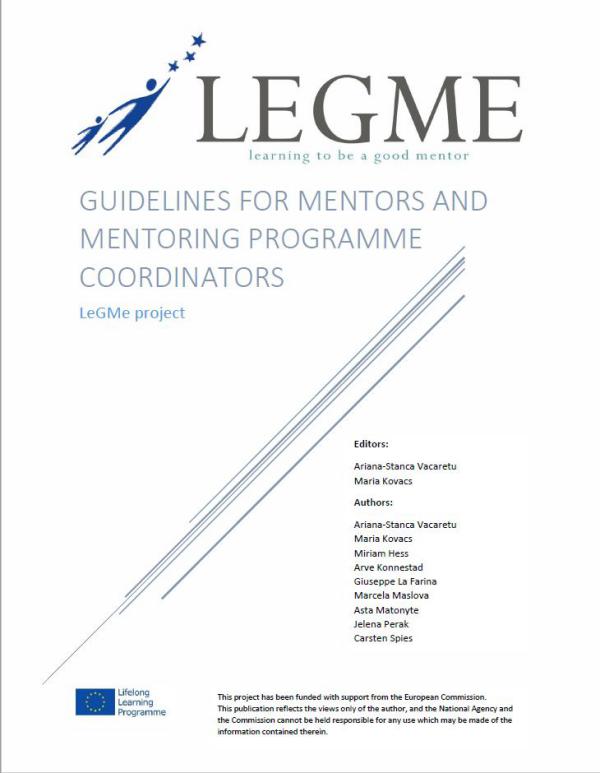
Guidelines for Mentors and Mentoring Programmes Coordinators (2015)
Publication serves as a guide for developing a mentoring program or a training/education program for mentors. The publication examines the key aspects of developing a mentoring program: program objectives, human resources, identifying mentors’ training needs, mentor training, selecting mentees, matching mentors and mentees, and proper implementation of the mentoring program (coordination, dissemination, evaluation). Based on the project’s experience, the authors of the guidelines present questions that program developers should consider.
The publication provides guidelines for developing a mentor training program: the program’s purpose, structure, duration, the role of the mentor trainer, training methods and strategies, instructional materials for trainers, and monitoring and evaluation of the training. It includes examples of how various aspects of the mentor training program were implemented in the project partners’ organizations, as well as descriptions of the mentor training programs developed and tested by the project partners’ organizations.
Set of Best Mentoring Practices (2014)
The publication presents 19 examples of best practices from Lithuania, Switzerland, Germany, Italy, Norway, Slovakia, Croatia, and Romania. Each partner described mentor training programs that are successfully operating in their country, specifying the program’s objectives, the nature of the sessions, their duration, the methods used, the instructional materials employed, and the profiles of the mentors and their mentees.
Download EN
Monitoring and Evaluation System (2014)
The main objective of the monitoring and evaluation system is to collect data that will be used to monitor and evaluate the implementation of the project’s objectives and mentoring programs.
The project partners have agreed on a common system that would cover the activities of all target groups: mentors, mentor trainers, mentor coordinators, and mentees. The monitoring and evaluation system includes the following indicators: what needs to be monitored and evaluated, which aspects of the activities need to be monitored and evaluated, how to collect data and information (methods, tools), when to collect them, and who performs the monitoring and evaluation. Methods and tools for evaluating the project and program are briefly presented.
The publication presents national monitoring and evaluation systems developed by partner organizations in accordance with common guidelines, as well as evaluation questionnaires and self-assessment tools designed for target groups.
Based on the monitoring and evaluation data, the project partner organizations prepared national reports on the piloting of mentoring programs.
Download EN
National Reports of Mentors Programme Piloting (2015)
This publication provides an overview of the project’s experience in implementing mentor training and counseling programs in eight countries: Slovakia, Germany, Switzerland, Norway, Italy, Romania, Croatia, and Lithuania. The reports analyze how volunteer mentors help socially vulnerable children and youth develop life skills, improve academic performance, and promote reading. The document presents specific results from pilot programs, mentor selection criteria, and training methodologies, emphasizing the importance of ongoing professional support. It also identifies emerging challenges, such as difficulties in recruiting volunteers or the specific nature of working with children with behavioral problems, and provides recommendations for improving the programs in the future.
Download EN
PROJECT RESULTS
- The project provided learning opportunities for adults (mentors and their trainers) so that they could better contribute to successful non-formal education.
- The project partnership facilitated the sharing of experiences and effective methods in mentoring programs among European colleagues.
- By supporting one another through the partnership, the project partners developed mentor training programs within each partner organization.
Mentor support/training programs tailored to the needs of various categories of mentors were developed, along with a guide for mentors and mentor program coordinators. - The mentor programs included adults who were able to dedicate time to mentoring (retirees, unemployed individuals, students, etc.) had the opportunity to feel that they were contributing to the well-being of the community by actively meeting the needs of their communities as responsible adults, which is an important aspect of adult life.
PROJECT DISSEMINATION
Mentor Program in Lithuania (2014)
This film talks about how adults can become older friends to children, providing them with emotional support, growing together, and building meaningful relationships. The project’s mentors share their experiences working with children:
- The essence of mentoring: It is not about teaching, but about friendship. Mentors learn to listen to the child, understand their perspective, and build a relationship based on trust and support.
- Personal growth: Volunteers emphasize that by helping others, they themselves feel happier. The program helps them become more responsible, more sensitive to others’ problems, and better listeners.
- Activities together: Mentors spend time with children in a variety of ways: they go to the theater, bake cookies, draw, go ice skating, or simply talk about life and values.
- Support for mentors: The program includes monthly meetings where mentors share experiences, resolve issues that arise, and support one another.
Munterwegs Mentor Program (2014)
A film produced by our Swiss partners about a mentoring program that brings seniors and children together for shared activities. The program aims to bridge the generational gap. Seniors become mentors to children, spending their free time together, playing, and learning from one another. The mentors emphasize that this activity makes them feel needed and “young at heart.” After retiring, they have plenty of time, which they want to use meaningfully by sharing their experience and gratitude. Children receive an older person’s attention, support, and the opportunity to see the world from a different perspective. Mentors are delighted to observe the children’s development and emotional growth.
In the video, mentors share their experiences, talking about their motivation for joining the project and the joy this connection brings.

Funded by the European Union. Views and opinions expressed are however those of the author(s) only and do not necessarily reflect those of the European Union or the National Agency. Neither the European Union nor National Agency can be held responsible for them.