
Media Literacy and Critical Thinking in Youth Work

Project No. 2016-3-LT02-KA205-005089
Project duration: 1 February 2017–31 August 2019
Project co-funder: EU program Erasmus+
Projekto coordinator: Public Institution National Institute for Social Integration
Project partners:
Vytautas Magnum University (Lithuania)
Modern Didactics Centre (Lithuania)
Vilnius Open Youth Ceter „Mes“ (Lithuania)
National Agency for Education (Lithuania)
The Centre for Investigative Journalism Limited (United Kingdom)
European Youth Press Network of Young Media Makers (Germany)
Youth Division, City of Helsinki, Culture and Leisure Sector (Finland)
Latvijas Universitate (Latvia)
Seiklejate Vennaskond (Estonia)
PROJECT RELEVANCE
In the age of information wars and noise, those working with youth face the task of helping a maturing generation of citizens distinguish valuable information from the trivial, facts from opinions, and disinformation from reliable sources. An overcrowded social media space, evolving digital technologies, and communicative manipulations that equate fantasy with reality have made this a truly difficult challenge. Young people will have to make responsible decisions when electing their representatives and building their nation based on information whose reliability they will have to assess themselves. To avoid becoming tools for politicians, marketers, or malicious manipulators, thorough preparation is essential.
PROJECT AIM
To develop youth critical thinking and media literacy.
PROJECT OBJECTIVES
- To take over the foreign partners good practices in critical thinking and media literacy areas.
- By invoking international cooperation create critical thinking and information literacy methodology for young journalists and empower to adapt it in practice both – young journalists and institutions working with them.
- By invoking international cooperation, set critical thinking and information literacy educational program which would fit in Lithuania non-formal education scholars program requirements and empower youth workers to adapt it.
- In order to ensure sustainability of project results, empower young leaders by developing their critical thinking and information literacy to adapt it through peer-to-peer education.
- Implement critical thinking and information literacy promotion campaign among youth..
PROJECT TARGET GROUPS
The project is intended for senior high school students, youth leaders, members of youth organizations, youth workers, and social workers.
PROJECT ACTIVITIES
Youth Leader Training
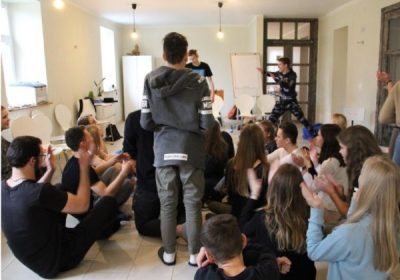
Students in grades 9–12 were invited to participate in the Peer-to-Peer Educators Program training from October 4–8, 2017, and January 24–28, 2018. The program involved 28 youth leaders from all over Lithuania: Visaginas, Vilnius, Kaunas, Klaipėda, Šakiai, Joniškis, Mažeikiai, Plungė, Panevėžys, and Ukmergė. During the training, the young participants delved into the concepts of critical thinking and media literacy, media ethics, and how to distinguish propaganda from reliable information. They also learned to better understand advertising content and take effective measures to stop cyberbullying on social networks. Following the training, the youth leaders formed groups of 8–15 peers in their schools or communities and, supported by youth workers and mentors, prepared and led weekly critical thinking sessions for their friends. Throughout these sessions, the youth leaders tested 20 active learning methods.

Young Journalists Training
24 young people who were either studying or planning to study journalism participated in the project. They took part in critical thinking and media literacy training from November 22–25, 2017, and February 22–26, 2018. During this time, the young journalists met with Lithuanian and foreign specialists in analytical and investigative journalism, who conducted lectures on journalism principles and ethics, interview techniques, methods of communicating with sources, information reliability, secure online communication, investigative and analytical journalism methods, creative non-fiction writing, and video journalism. With the help of professional journalists, the participants had to formulate a journalistic topic and prepare an analytical piece, which was subsequently published in the national media.
Youth Worker Training
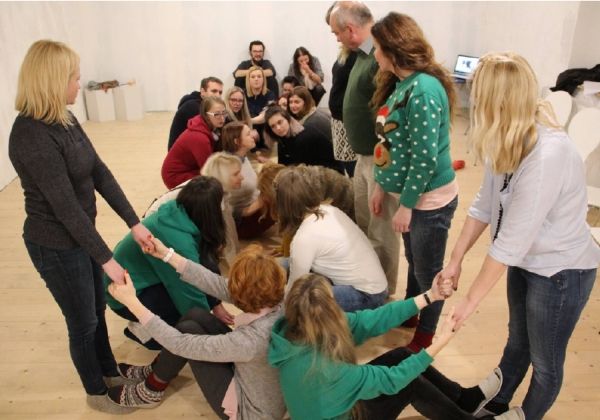
26 youth workers participated in critical thinking and media literacy training from January 11–15, 2018. During the sessions, they gained knowledge on how to apply critical thinking and media literacy development methods in their daily activities, and also learned the methodologies of the Peer-to-Peer Educators Program. By collaborating with regional coordinators of the Peer-to-Peer Educators Program, the youth workers helped youth leaders organize sessions in their schools and implemented non-formal education projects in their respective cities.
PROJECT INTELLECTUAL OUTPUTS
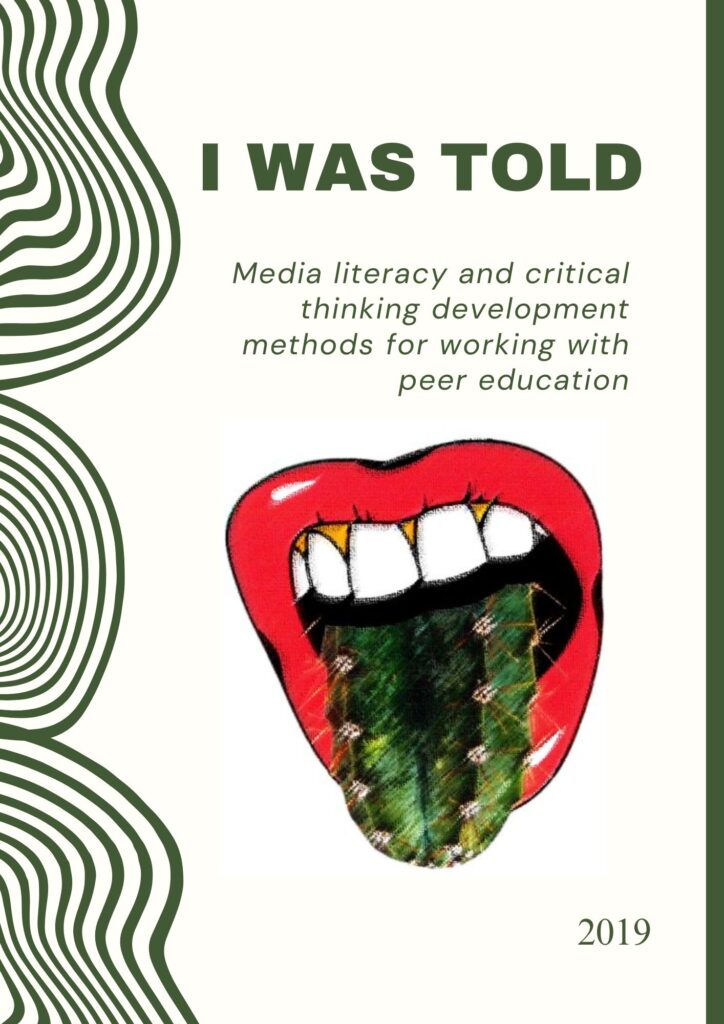
I WAS TOLD: Media literacy and critical thinking development methods for working with peer education (2019)
Methodology for Youth Working with Peers presents ways to talk to friends about critical thinking, media, and information literacy. It is widely agreed that in today’s technological age, critical thinking is essential for being an active and conscious individual. Living in a media-mediated reality, it is crucial to be able to distinguish valuable information from the trivial, and reliable sources from the unreliable. It is hoped that the methods provided in this publication will serve as a strong starting point for critically understanding and analyzing the world of media.
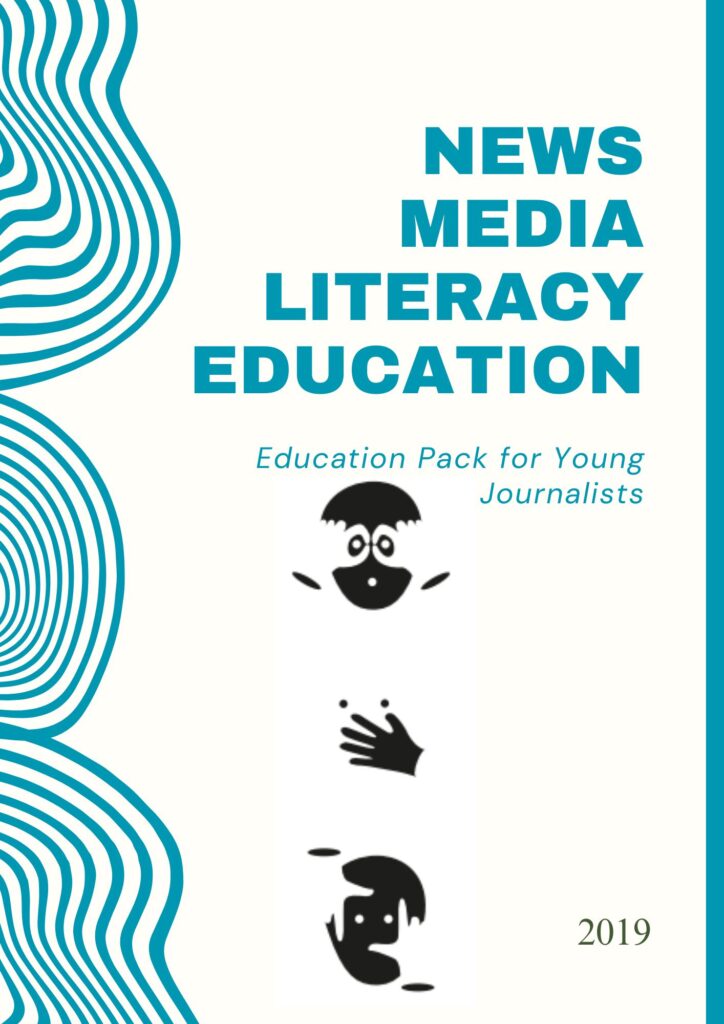
News Media Literacy Education: Education Pack for Young Journalists (2019)
The methodology provides skills for the critical analysis of media texts and images by analyzing media content according to a specific framework. It reveals aspects of news quality, contexts of presentation or omission, and encourages reflection on the underlying reasons for these choices. The practical tasks in the publication will encourage users not to rush to conclusions, to ask questions, to recognize hidden meanings, and to not be afraid of reflecting on “uncomfortable” opinions or information, as well as identifying and critically evaluating their own biases.
Download EN
Participants feedback
 I found new friends, and now I feel that I can express my opinion. I’ve started noticing things I hadn’t noticed before. Ultimately, this project helped me decide what I would like to study in the near future.
I would like to thank everyone for the project. This project helped me create the world I would like to live in.
The project gave me the opportunity to express my opinion and to improve my communication and planning skills.
Funded by the European Union. Views and opinions expressed are however those of the author(s) only and do not necessarily reflect those of the European Union or the National Agency. Neither the European Union nor National Agency can be held responsible for them.