



Project No. 100860-CP-1-2002-1-CZ-GRUNDTVIG-G1PP
Project duration: 1 October 2002–30 September 2004
Project co-funder: European Comission, Socrates Grundtvig programme
Project coordinator: Ostravska universita (Czech Republic)
Project partners:
Modern Didactics Centre (Lithuania)
ATHENA-Association for Education and Development of Women (Czech Republic)
GIP FC-IP Clermont-Ferrand (France)
DEPENA Peňafiel (Spain)
Karel de Grote-Hogeschool (Belgium)
KEK DIMOU Kalamatas (Greece)
CLMAL Borlänge (Sweden)
Veb-das europäische Bildungsinstitut (German)
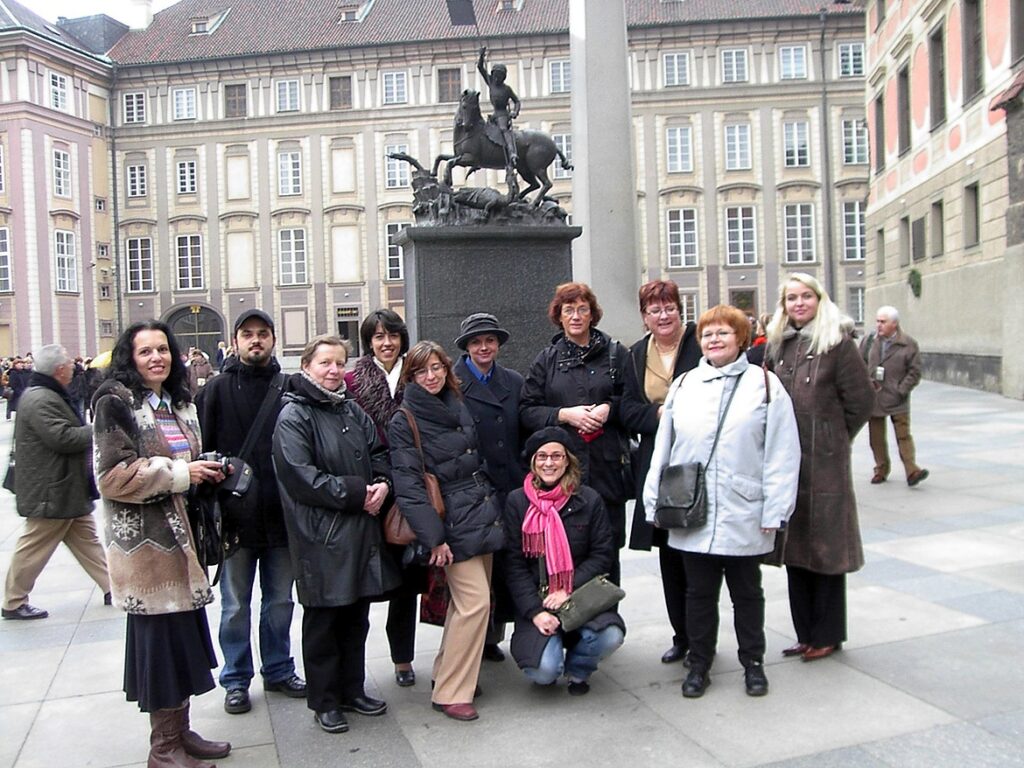
Project team
PROJECT RELEVANCE
Štai teksto vertimas į anglų kalbą:
“In recent years, the number of refugees and immigrants has been increasing not only in European Union countries but also in Central and Eastern Europe. The issue of social integration of immigrants is becoming relevant for the whole of Europe. For both refugees and immigrants, it is important not only to learn the language of the new country but also to develop social abilities, as well as cultural and social skills, in order to become equal European citizens. Teachers and trainers play a significant role in the social integration of refugees and immigrants, as they act as intermediaries between ‘old’ and ‘new’ members of society. Therefore, they must be able to understand not only the languages of the newcomers but also their culture, customs, and the reasons behind their behavior. Teachers have the opportunity to promote mutual understanding between both parts of society, thereby contributing to the prevention of racism and xenophobia.
Traditional teaching methods are often not adapted for working with audiences from different cultures. The project aims to fill this gap by creating specific recommendations and tools to help specialists communicate more effectively with newcomers.
PROJECT AIMS
- To contribute to the reduction of racism and xenophobia in Europe.
- To reduce the social exclusion of immigrants, refugees, and their families.
- To disseminate knowledge about different cultures, customs, and ways of thinking in Europe.
- To promote the awareness and understanding of cultural, traditional, and cognitive differences among immigrants and refugees living in various parts of Europe.
- To change the attitudes and behavior of European residents towards immigrants and refugees.
- To disseminate best practices in teaching people from diverse cultural backgrounds.
- To prepare teachers and trainers for effective communication with both immigrants/refugees and the general public.
PROJECT TARGET GROUPS
- Teachers of immigrants and refugees.
- Intermediaries working with ethnic minorities.
- Social workers.
- Staff of immigrant and refugee camps.
- Adult education teachers (adult educators).
PROJECT ACTIVITIES
National project coordinators collected information on immigration policies in their respective countries and analyzed the social situation of immigrants, refugees, and their families. In the partner countries, a study of local residents’ opinions, attitudes, and prejudices regarding immigrants was conducted using interviews and questionnaires. Teachers of immigrants were also surveyed to identify the difficulties they face when communicating with immigrants and the interaction challenges they observe in the classroom between immigrants and other students. Furthermore, the surveys explored whether the available teaching materials for immigrants and refugees were the same as those for other residents and identified specific learning needs of immigrants. All of this material was analyzed and utilized in the development of the teaching methodology and guides. During the project, best practices from immigrants and refugees were also collected and summarized in a separate publication.
PROJECT INTELLECTUAL OUTPUTS
International Survey of Adult Educators on Immigrant Integration, National Identity, and the Need for Methodological Materials in Europe (2003)
This pilot research aimed to identify the needs and challenges of professionals (teachers, social workers, and trainers) working in adult education with culturally diverse groups. The study explored the participants’ perspectives on European citizenship, national identity, and the specific problems faced by immigrants. The survey utilized a combination of standardized and open-ended questionnaires distributed across eight European countries: Belgium, the Czech Republic, Germany, Spain, France, Greece, Lithuania, and Sweden. Respondents were selected from various institutions, including schools, adult education institutes, and refugee camps. The research highlighted a significant demand for adapted teaching materials and unified methodologies to better serve immigrant needs, a call particularly strong in Lithuania and the Czech Republic. Trainers identified language proficiency and cultural orientation as the primary pillars for successful social participation and integration. The data revealed that national identity remains a stronger influence than European identity among educators. Citizenship was often defined through a sense of belonging to a community and, in some regions, strongly associated with patriotism and adherence to the law. The insights gathered from this analysis served as the foundational framework for developing specialized training modules and methodological guides for the TEC project.
Download EN
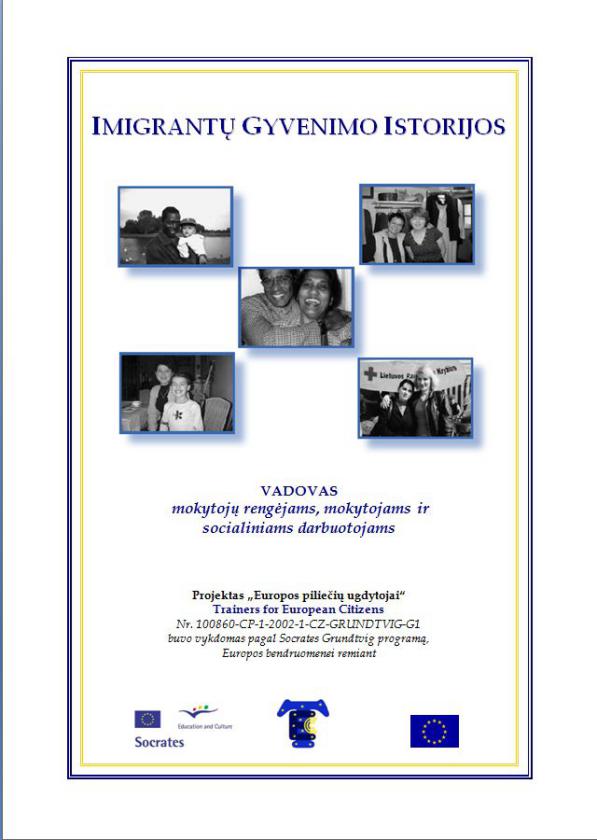
Life-Stories of Immigrants Guidebook for Trainers, Teachers and Social Workers (2004)
This methodological publication was developed to help education and social sector workers better understand immigration processes and promote the integration of newcomers. The book reviews the immigration situation and policy directions of eight European countries: Belgium, the Czech Republic, France, Germany, Greece, Lithuania, Spain, and Sweden. The primary focus is on authentic life stories of immigrants, which reveal personal experiences, success factors, and emerging challenges in a foreign culture. The publication analyzes objective integration factors, such as the laws of the host country, as well as the subjective characteristics and motivation of the migrants themselves. The guide aims to break down cultural barriers and provide practical tools for fostering public openness and preventing xenophobia. This publication will be of service to specialists working in the fields of adult education and social assistance.
Methodology for The Active Communication (2004)
This methodology is designed for lecturers, social workers, and administrative specialists working with immigrants and refugees in Europe, aiming to facilitate their integration through effective communication. The publication analyzes how cultural differences, perceptions of hierarchy, and varying language usage affect the communication process and the learning of a new language. The authors provide practical advice and tasks to help develop social empathy, resolve intercultural conflicts, and create a trust-based learning environment. The methodology emphasizes that language skills alone are not enough for successful integration – it is essential to understand and respect the cultural values and behavioral norms of both the host country and the newcomers.
Download EN
PROJECT RESULTS
- Teachers, social workers, and refugee camp staff acquired specific knowledge on how to communicate effectively with newcomers and resolve intercultural conflicts.
- Partners from different countries (Lithuania, Czech Republic, France, Spain, Germany, Sweden, Belgium, Greece) shared successful integration examples and methods.
- Increased inclusion of immigrants and refugees into society by providing them with necessary social and communication skills.
- Contributed to the reduction of racism, xenophobia, and stereotypes by changing the attitudes of local communities towards “new” members of society.
- Teachers became more effective “intermediaries” between immigrants and local residents, promoting mutual understanding.
- Strengthened international cooperation among educational institutions in Europe in addressing common integration challenges.

Funded by the European Union. Views and opinions expressed are however those of the author(s) only and do not necessarily reflect those of the European Union or the National Agency. Neither the European Union nor National Agency can be held responsible for them.